
Emeutes en Corée du Nord – février 2010

North Korea ‘struggling against civil unrest’
http://www.timesonline.co.uk
February 3, 2010
The North Korean dictatorship is struggling to contain civil unrest and runaway inflation caused by a drastic revaluation of its won currency, which is threatening new food shortages in the already hungry nation, according to reports in South Korea.
According to one news website, which has informants inside North Korea and has proved accurate in its reporting in the past, the Government has reversed its decision to ban private markets after isolated incidents of violence and unrest.
A separate report says that the senior member of North Korea’s Workers’ Party who led a recent crack down on markets and small scale traders has been purged, suggesting that the country may cautiously loosen its economy after a period of attempting to reassert central control.
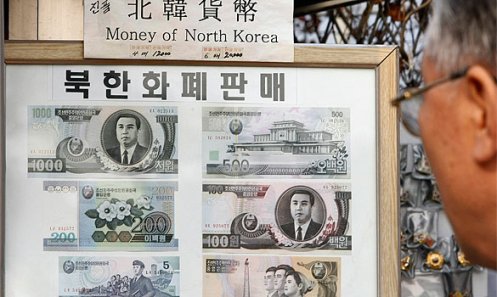
It was at the end of last November that the Government announced a drastic revaluation of the won in an apparent effort to crack down on the country’s burgeoning free market economy. All North Koreans were required to swap old won notes with new ones at an exchange rate of one to 100, knocking two zeroes off their value. Because of a cap of 100,000 won per family ((€526 at the official exchange rate), anyone with significant holdings of cash had their savings wiped out.
Since then, reports of inflation and food shortages have trickled out of the isolated country via traders and smugglers in China, as well as North Koreans close to the Chinese border who take the risk of keeping illegal mobile telephones. According to such informants, quoted anonymously in the Seoul-based DailyNK news website, there has been “an explosion in the number of casualties resulting from popular resentment at harsh regulation of market activities by the security apparatus across North Korea.”
Agents of the People’s Safety Agency (PSA), which is conducting a so-called “Fifty Day Battle” against illegal enterprise, were reported to have been attacked and driven away as they sought out market activity in the city of Pyongsung in North Pyongan province. In the once prosperous industrial city of Chongjin on the country’s east coast, a steel worker named Jeung Hyun Deuk was reported to have killed an agent of the National Security Agency named Cho.
An unnamed source in the city told the DailyNK: “Traders and residents have lost their property due to the redenomination and are pretty much being treated as criminals as a result of the NSA and PSA’s ‘Fifty Day Battle’. Therefore, people are taking revenge on agents, since they feel so desperate that, regardless of their actions, they will die.”
The Seoul newspaper Chosun Ilbo reports today that Pak Nam Gi, finance director of the Workers’ Party, has been sacked, citing an unnamed diplomat in Beijing. “North Korean officials are busy blaming each other for the failed currency reform and Pak, who spearheaded the revaluation, is believed to have been sacked,” the diplomat told the newspaper. “Markets have come to a grinding halt following the currency revaluation and prices have soared.”
Recent utterances by the North Korean leader, Kim Jong Il, also hint at an awareness of the economic difficulties being faced by his people. “My heart bleeds for our people who are still eating corn,” he was quoted as saying in the Rodong Sinmun, the newspaper of the Workers’ Party. “Now what I have to do is feed our great people as much white rice, bread and noodles as they want.”
The implication — that all is not perfect in North Korea — in unusual in the country’s strictly controlled, and almost unwaveringly celebratory, state media. Last month he said: “We have already reached the status of a strong country in the military field, let alone politics and ideology, but there are still quite a number of things lacking in people’s lives.
“I am trying to implement the will [of his father, the founding “Great Leader” Kim Il Sung] by solving these problems. Although the Great Leader told us that we have to let the people eat rice with meat soup, wear silk clothes and live in a tiled roof house, we have not accomplished his will.”
Corée du nord : émeutes de la faim
AFP
02/02/2010
Des Nord-Coréens affamés ont attaqué des agents de sécurité dans le pays communiste, l’un des plus pauvres au monde, en proie à des pénuries alimentaires chroniques, ont affirmé aujourd’hui plusieurs médias sud-coréens.
Les troubles ont pris de l’ampleur depuis la brusque réévaluation du won nord-coréen en novembre 2009, une mesure qui visait à enrayer les transactions au marché noir et qui a en revanche fait flamber les prix. La décision a pris de court les habitants et entraîné une aggravation des pénuries alimentaires, selon le journal d’informations en ligne Daily NK, hostile au régime nord-coréen.
« Les commerçants et les habitants ont perdu leur biens en raison de la réévaluation », assure ce média. « Les gens se vengent donc sur les agents de sécurité car ils se sentent désespérés avec le sentiment que, quoi qu’ils fassent, ils mourront », affirme une source anonyme citée par le journal. Selon le Daily NK, un incident s’est produit hier « lorsqu’un certain nombre » de gens ont agressé une patrouille d’agents sur des marchés de Pyongsung, dans la province de Pyongan-Sud. Le quotidien en ligne n’a donne aucun détail sur d’éventuelles victimes.
Son confrère du JoongAng Daily a affirmé que le patron des services secrets sud-coréens (NIS) avait fait état, la semaine dernière devant les députés, d’émeutes causées par cette réévaluation monétaire. « La mesure a provoqué des émeutes à certains endroits (…). Mais le gouvernement nord-coréen semble les avoir contrôlées », selon les propos de Won Sei-Hoon rapportés par le quotidien. Enfin, l’agence Yonhap citant des commerçants près de la frontière sino-nord-coréenne a fait état de gens mourant de faim.
Des centaines de milliers de Nord-coréens sont morts dans la grande famine des années 90 due aux calamités naturelles et à l’incurie économique du régime.
Depuis, la Corée du Nord a abondamment compté sur l’aide internationale pour nourrir sa population mais les flux sont régulièrement interrompus.
Violence in N.Korea as hunger woes mount: reports
AFP
By Jun Kwanwoo
29 01 2010
SEOUL — Angry North Koreans have attacked security agents as hunger woes mount following a crackdown on free-market trade, according to reports on Tuesday from groups in Seoul with contacts in the communist state.
Social unrest and riots have flared since a shock currency revaluation by Pyongyang last November worsened shortages of food and other goods for an increasingly desperate population, they said.
« Traders and residents have lost their property due to the redenomination, » Daily NK, an online newspaper hostile to the reclusive regime in the North, quoted one source in North Korea as saying.
« Therefore, people are taking revenge on agents, since they feel so desperate that regardless of their actions, they will die, » the source in North Hamkyung province said. « As a result, social unrest is becoming more serious. »
In one violent incident, Daily NK said « a number of people » assaulted a group of security agents on patrol on Monday in markets in Pyongsung, South Pyongan province.
It gave no details of any casualties.
The paper, citing a group of defectors, said a fight had also broken out recently between residents and security agents monitoring the crackdown in Hyesan in Yanggang province.
As the fight turned nasty, it said, one resident snatched a gun from an agent and fired at random — leaving one security official in critical condition.
The North told its citizens on November 30 to swap old banknotes for new at a rate of 100 to one. But it capped the amount which could be exchanged, reportedly wiping out some people’s savings and causing widespread anger.
The revaluation was widely seen as an attempt by the regime to reassert control over the economy and clamp down on growing free-market activities in the country of about 24 million people.
But the move has reportedly fuelled inflation and created chaos in North Korean shops and markets, with some people forced to barter goods to survive.
North Korea has suffered severe food shortages since a famine in the 1990s killed hundreds of thousands of people. The United Nations tightened sanctions last year in response to the North’s nuclear test and missile launches.
JoongAng Daily newspaper quoted South Korea’s National Intelligence Service (NIS) chief Won Sei-Hoon as telling lawmakers last week the currency change had caused riots.
« The move late last year led to riots in some places, » Won was quoted as telling the lawmakers in a closed session. « But the North Korean government appears to have them now under control. »
The NIS declined to confirm Won’s comments.
Yonhap news agency, quoting traders near the Chinese border with North Korea, said the number of people dying of hunger is rising.
That view was echoed in a newsletter by Good Friends, an aid group with contacts in the North.
It said residents, including war veterans aged in their 70s or 80s, protested last month outside a city hall in Danchon, North Hamkyong province and that authorities rushed to release 1,000 tons of rice to placate them.
Riots after change in currency by Pyongyang
joongangdaily.joins.com
February 02, 2010
The top South Korean intelligence official has revealed that North Korea’s currency revaluation caused sporadic riots last year, confirming speculation that the move was unpopular with the public.
According to multiple sources, Won Sei-hoon, head of the National Intelligence Service, told lawmakers last week that North Korean people weren’t pleased with the currency revaluation. “The move late last year [Nov. 30] led to riots in some places,” Won was quoted as saying by the sources. “But the North Korean government appears to have them now under control.” Won last week met with members of the International Knowledge Economy Forum, a study group of legislators. But he declined to discuss the specific nature of the riots.
The revaluation, the North’s first such move in 17 years, was considered to have been aimed at curbing inflation and at stifling underground economic activity. Intelligence sources have said many North Koreans piled up cash by operating personal businesses. But with revaluation at the exchange rate of 100 to 1, an old 1,000 won bill became a new 10 won bill. Many saw the value of their money nosedive. North Koreans are banned from making profit through personal ventures other than their regular day jobs. But as they stashed their cash literally inside closets, the low level of cash flow had a trickle-down effect on the economy as a whole.
Experts on the North Korean economy have said the North is not comfortable with the development of an entrepreneurial class in society.
Kim Heung-gwang, head of the Seoul-based think tank North Korea Intellectuals Solidarity, added that some North Korans revolted against the government’s restriction that forced them to exchange only 100,000 won per household. He said in some cities, such as Hamheung and Chongjin in the northeast, merchants had physical shoving matches with police who tried to forcefully close their small markets. “Within two months, the price of rice went from 40 won to 1,200 won per kilogram,” Kim said.





 anthropologie du présent