
Emeutes en Mongolie Intérieure 内蒙古 – 29-30 mai 2011
Protests break calm in China’s Inner Mongolia area
AP
30 05 2011
BEIJING (AP) — Calls for justice by Mongols in the resource-rich, prosperous borderland of northern China have shattered the calm there to which Chinese leaders have grown accustomed.
Clashes that left two Mongols dead in mid-May triggered protests in several cities and towns last week that have become the largest demonstrations in the Inner Mongolia region in 20 years. The government has responded with a broad clampdown, pouring police into the streets, disrupting Internet service and confining high school and university students to campus.
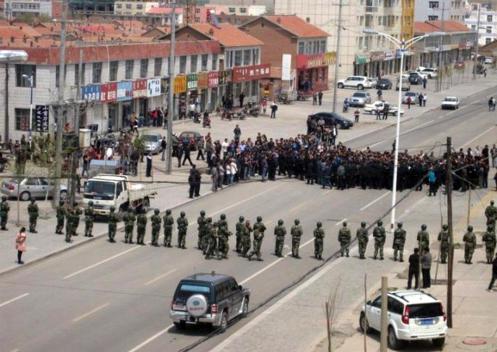
The strategy appears to thwarted major demonstrations in the regional capital of Hohhot, though a witness and monitoring group said one group attempted to march on government offices on Monday but were turned back by police. Several dozen protesters were detained, the U.S.-based Southern Mongolian Human Rights Information Center said.
There were no reports of protests on Tuesday and people reached by telephone at travel agencies, hotels, fast food restaurants and shops in Hohhot said they know of no demonstrations.
Staff at government offices, three local universities, and government-controlled Muslim and Buddhist religious institutions refused to comment in a likely sign that a media blackout has been ordered.
Hohhot’s main downtown square has been cordoned off with crime scene tape and paramilitary policemen stationed along its outer edge, according to photos taken Sunday and posted on the Website of the Southern Mongolian Human Rights Information Center. Riot police vehicles were parked along side streets, while officers also guarded the gates of local universities to prevent students from leaving or outsiders from entering.
Prevented from marching, students have instead staged small demonstrations and acts of defiance on campus, including throwing Chinese-language textbooks out of dormitory windows, the center said. Teachers were also being confined to campuses, it said. Read more…
中国镇压和平抗议蒙古人 逮捕数十人
美国之音
记者: 杨明 | 华盛顿 2011年 5月 30日
中国内蒙古自治区当局采取强硬措施,镇压在呼和浩特等市举行和平抗议的蒙古人,逮捕了数十人。与此同时,内蒙古当局为了安抚民众,表示要严惩蓄意轧死牧民莫日根的凶手,并改善有关的采矿业规定。
*当局没放人,反倒再抓人*
“南蒙古人权信息中心”主任恩赫巴图在接受美国之音采访时表示,上千名蒙古族牧民5月30日在呼和浩特等市举行抗议示威,要求保护蒙古族的权益,释放27日在正兰旗抗议中被当局逮捕的近40名牧民。
恩赫巴图说,尽管当局出动大量武警在一些重点地区戒备,仍然有约1千名牧民不畏被抓的危险,30日上午11点多钟举着标语,喊着口号,到市中心抗议示威。他说,抗议活动持续了近一个小时,又有几十名牧民被抓。不过,这些人是否仍在被关押或已被放出来,目前还无法得到独立消息来源的证实。
“南蒙古人权信息中心”主任恩赫巴图还表示,当局采取限制出行的措施,严禁在校的蒙古族学生离校,迫使一些蒙古族学生在校内用撕毁和丢弃汉文书籍等方式进行抗议。另据路透社报导,当局加紧了对互联网进行的审查,“内蒙古”一词,已经被作为敏感词被封。
*当局维稳招数:胡萝卜加大棒*
中共内蒙古当局在动用武警和安全人员镇压抗议蒙古族牧民的同时,也想方设法用中共经常采用的收买和安抚的做法,平息蒙族牧民的不满和愤慨。
《内蒙古日报》报导,内蒙古自治区党委书记胡春华5月27日到这次抗议事件的中心西乌珠穆沁旗,安抚学校的教师和学生。报导说,胡春华了解了老师和同学们对当前形势的看法和疑惑,承诺将依照法律程序,从重从快惩处犯罪嫌疑人,坚决维护法律尊严和受害者及家属的权利。
5月10 号西乌旗牧民莫日根在保护自家草场免遭破坏时被运煤车轧死。另外,5月15号,阿巴嘎旗玛尼图煤矿一矿区居民在与煤矿工人冲突中被打死。胡春华说,这两宗案件“性质恶劣,民愤极大”。
新华社星期一报导说,锡林浩特中级人民法院将开庭审理矿区居民同煤矿工人冲突案。不过,蓄意轧死牧民莫日根的汉人卡车司机,虽已经被缉拿归案,尚未被公开审判。此前,南蒙古人权信息中心对美国之音说,莫日根的家人已经获得房子和60万元人民币的赔偿。
此外,《内蒙古日报》报导,内蒙古自治区党委上星期五决定,免去海明的中共西乌旗委书记职务,由斯琴毕力格接任。 此外,政府将扩大中等学校“免学费、免书费”的范围。
*恩赫巴图:蒙古人的愤怒非一日之寒*
不过,南蒙人权信息中心主任恩赫巴图表示,胡春华所说的,“发展是第一要务,但要把维护群众利益作为根本出发点”,其根本目的仍然是在追求经济发展,无法安抚蒙古族牧民。
恩赫巴图说:“胡春华的话很难安抚蒙古人的愤怒和不满,因为蒙古人的愤怒和不满不是简单的一两天的事情,是根深蒂固的一个问题。因为蒙古人在自己的土地上受欺压很长时间,胡春华的承诺,到底能不能按照他承诺的那样去做,这也是一回儿事”。
内蒙古自治区是中国最大的产煤区,目前人口约2400万人,其中蒙古族人不足20%。恩赫巴图说,蒙古人抱怨遭受汉人的经济剥削和文化侵蚀。
*新华社:商讨维稳政策 化解社会危机*
新华社报导说,中共中央政治局30日召开会议,专门研究加强和创新社会管理问题。报导说,社会管理事关巩固共产党的执政地位,国家长治久安,人民安居乐业的问题。
另一方面,新华社报导说,内蒙古自治区出台了提高矿业生产管理水平,保护矿区生态环境和居民利益的措施,包括对矿场和物流中心的环境和民生问题进行排查和自纠,研究制定矿山开发与草原生态保护长效机制和补偿机制等。
*恩赫巴图:以尊重蒙古人的方式发展经济*
不过,恩赫巴图认为,这些被认为是针对牧民莫日根被运煤卡车轧死后采取的应对措施,并不能解决问题,因为汉人主导的经济开发本身,同原住民的传统生活方式,有着根本上的冲突。他提出的解决方式是:
“应该解决的方式是中国当局跟当地的牧民商量好。如果当地的牧民愿意开发自己土地上的自然资源,而且全部由牧民自己参与这些开发的活动的话,有计划的话,还可以,但是现在的情况根本不是这样的。”
另据报导,一些蒙古人29日在中国驻华盛顿大使馆和纽约总领事馆前举行示威活动后,30日100多名蒙古人在中国驻日本大使馆前示威,抗议他们所说的北京侵犯蒙古人的人权。在蒙古国首都乌兰巴托也有约50人举行了声援抗议示威。
More news
- Anger Over Protesters’ Deaths Leads to Intensified Demonstrations by Mongolians
- Inner Mongolia protests prompt police crackdown
- Inner Mongolia unrest prompts new rules to for mining industry
- China clamps down on Mongol riots
- China Makes Effort to Cool Unrest in Inner Mongolia
- TENSION RISES IN INNER MONGOLIA WITH MARSHAL LAW IN FORCE
- Mongol protests put down
- Protests break calm in China’s Inner Mongolia area
- Inner Mongolia Unrest Prompts China to Change Mining Rules
- Mongolia protests cause Communist party to order crackdown
- Protests break calm in China’s Inner Mongolia area
- Chinese Authorities Try to Limit Protests in Inner Mongolia
- China clampdown in Inner Mongolia
- Inner Mongolia to improve mine,transport safety after protests
- Political Star’s Career Hinges on Mongolian Protests
- Inner Mongolia official disputes report of martial law
- Chinese Try to Appease Mongolians
- China Censors Web to Curb Inner Mongolia Protests
- China tries to avert Inner Mongolia protests
- China Clamps Down in Bid to Halt Protests in Inner Mongolia
- China tightens grip on Inner Mongolia before protest
- More demos planned in China’s Inner Mongolia
Informations
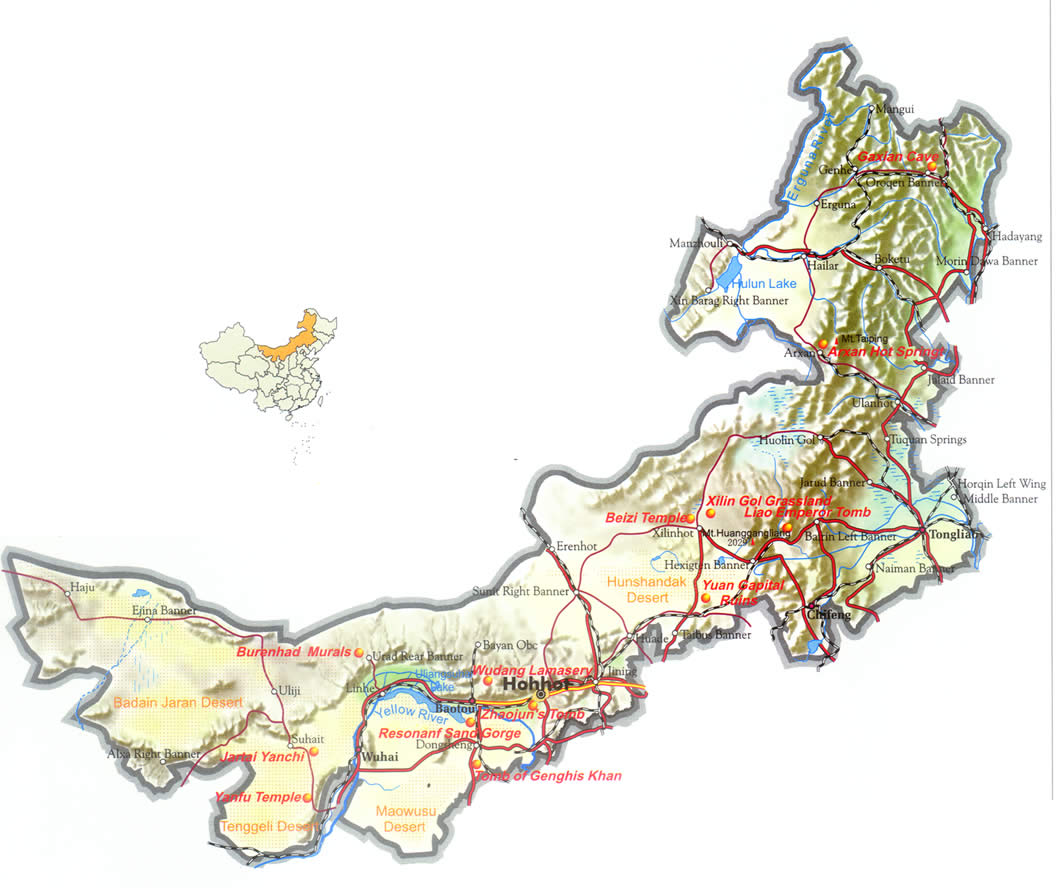
La Mongolie-Intérieure est une des cinq régions autonomes de la République populaire de Chine (« Région autonome de Mongolie-Intérieure », au statut particulier, comme le Xinjiang (Turkestan Oriental) ou le Xizang (Tibet). La Mongolie-Intérieure est la partie méridionale de la Mongolie, région dans le centre-est de l’Asie. C’est une région qui est principalement désertique, couverte notamment par le désert de Gobi. La Mongolie-Intérieure est distincte de la Mongolie extérieure, qui était un terme utilisé par la République de Chine et les gouvernements précédents pour se référer à ce qui est maintenant l’État indépendant de Mongolie et la république russe de Touva, la Bouriatie et la Kalmoukie.





 anthropologie du présent