
Affrontement meurtrier à العيون Al Ayoun – 8 novembre 2010
Sahara : Jours de fièvre
18/11/2010 Le récit des événements par François Soudan sur le site de

Répression à huis clos
Elwatan.com
Les journalistes étrangers ont été empêchés de se rendre à El Ayoun, prélude à une vaste répression à la suite des émeutes sanglantes de ces dernières 48 heures.Le dernier bilan s’élèverait à 19 morts sahraouis.
Difficile d’avoir la moindre information sur l’évolution de la situation dans la ville d’El Ayoun occupée. Les journalistes étrangers sont empêchés par les autorités marocaines de se rendre sur place, les liaisons téléphoniques avec la ville occupée sont coupées. Des observateurs et des militants d’Organisations non gouvernementales (ONG) sont chassés des territoires sahraouis occupés. Les capitales occidentales s’indignent et passent à autre chose, laissant un peuple se faire massacrer impunément. Sans doute que le Maroc veut une répression sans image et sans témoin. Un massacre à huis clos.
Trois jours après l’attaque sanglante de l’armée marocaine contre le camp de Gdeim Izik, surnommé le «camp de la liberté» (12 km de la ville d’El Ayoun), le bilan de la répression demeure provisoire. Le ministère sahraoui des Territoires occupés a annoncé, dans un communiqué, un nouveau bilan après la découverte de 8 corps aux alentours de la ville d’El Ayoun et a porté ainsi le nombre de victimes sahraouies à 19 morts : «Huit autres corps de victimes sahraouies ont été découverts, hier, non loin du camp Gdeim Izik, aux abords du Rio Dorro. Deux d’entre elles ont été abattues par l’armée marocaine, alors que la troisième a été écrasée par un camion militaire. La quatrième victime est un enfant de sept ans, résidant dans le quartier Douiret, assassiné lors d’une intervention de l’armée marocaine contre les manifestations organisées dans ce quartier. Les quatre autres victimes ont été retrouvées entre la ville occupée d’El Ayoun et oued Sakia El Hamra, dont les circonstances de leur mort demeurent inconnues.»
Le bilan provisoire de l’aveugle répression s’élève ainsi à 19 civils sahraouis assassinés, 732 blessés et 159 personnes portées disparues, a ajouté le communiqué.La tension reste très tendue, selon des responsables du Front Polisario. Certaines sources parlent «d’une véritable chasse à l’homme dans la ville d’El Ayoun occupée. Tous les militants sahraouis des droits de l’homme ont été arrêtés». Cela se passe loin des caméras de télévision et des regards des observateurs étrangers.
Le bilan dramatique de la répression sauvage qui s’abat sur les civils sahraouis rappelle étrangement l’infernale machine à tuer du Hassan II, de 1976 jusqu’au cessez-le-feu, en 1991.
Les autorités marocaines, quant à elles, ont avancé, hier, le chiffre de 11 morts dont 10 sont des militaires, selon l’AFP, prenant le soin d’éviter de parler des victimes du côté sahraoui.Le président la République arabe sahraouie et démocratique (RASD), Mohamed Abdelaziz, a déclaré, hier à Alger, que «la situation à El Ayoun connaît des développements très dangereux. La police marocaine continue de réprimer violemment des populations sahraouies civiles. On a enregistré de nombreux disparus et le nombre de morts risque d’être revu à la hausse». D’après le ministère sahraoui des Territoires occupés, «la ville d’El Ayoun vit toujours sous embargo militaire. L’armée marocaine patrouille dans la ville et a imposé un couvre-feu ; les populations civiles sahraouies sont soumises à une effroyable terreur». Les responsables sahraouis ne cachent pas leur inquiétude quant au sort réservé à leurs concitoyens arrêtés et disparus.
Il faut souligner, à ce sujet, que la responsabilité de la communauté internationale est totalement engagée. Depuis l’intifadha pacifique de mai 2005, les responsables sahraouis n’ont cessé de demander aux Nations unies d’élargir les prérogatives de la Mission des Nations unies pour l’organisation du référendum de l’autodétermination au Sahara occidental (Minurso) aux questions des droits de l’homme dans les territoires occupés. Un appel qui est resté, jusque-là sans écho. Incapable de faire respecter ses résolutions sur le conflit qui dure depuis 35 ans maintenant, l’ONU s’avère impuissante face au soutien actif qu’apporte l’Occident à l’occupant marocain. Le peuple sahraoui ne pourra plus supporter d’autres concessions et rester les bras croisés en comptant ses morts.
At least 16 die in Western Sahara camp clashes
The Irish Times
Wednesday, November 10, 2010
JANE WALKER in Madrid
ELEVEN WESTERN Saharan militants died, 700 were injured and 150 are missing, according to their own sources, and at least five members of Moroccan security forces have been killed after they raided a camp near the city of El Aaiún.
Details of resultant violent clashes over the past three days have not yet been confirmed by independent sources, as Morocco refuses to allow journalists to travel to the territory.
Those booked on flights to El Aaiún from Casablanca were not allowed to board, and all roads to El Aaiún from the nearest town, Tan Tan, were closed to all except official transport.
The violence broke out when Moroccan security forces, using tear gas, batons and water cannons – and live ammunition, according to militants – invaded the Gadaym Izik camp, set up by displaced Saharan people protesting Moroccan rule. The forces were repelled by militants armed with batons, knives and Molotov cocktails in the most violent protest at Moroccan rule in the 35-year dispute over the territory.
The Western Saharan dispute is the longest-running territorial dispute in Africa. Although mostly desert, the territory is rich in phosphates used in fertilisers, it boasts valuable fishing grounds and possibly has offshore oil.
It was a Spanish colony until Spain abandoned it at a time when the country was virtually leaderless during the dying days of General Franco, who died in November 1975. It was annexed by Morocco when King Hassan II invaded in the “Green March”.
Ever since, Spaniards have felt ashamed by their treatment of their former subjects – tens of thousands of whom live as refugees in tented camps in Tindouf, close to the Algerian border.
The Polisario Front, the liberation movement which seeks full independence for Western Sahara, waged a guerilla war until a UN-brokered ceasefire came into force in 1991. They are demanding a referendum on self-determination for their people, but Morocco is only prepared to grant partial autonomy. Talks between the sides have repeatedly broken down, and the last meeting in February ended in deadlock.
The violence threatens further UN-mediated talks between negotiators for the Moroccan government and members of the Polisario Front, due to take place in New York.
Ahmed Boujari, representing the front in New York, said the raid was “a deliberate act to wreck the talks”. UN spokesman Martin Nesirky expressed regret at the incidents. He said: “It is highly unfortunate that this operation and the events preceding it have affected the atmosphere in which these talks are being held.”
Marruecos eleva a 6 los muertos en los disturbios del campo de protesta saharaui
AFP
9 11 2010
EL AAIÚN, Sáhara Occidental — Las autoridades marroquíes anunciaron este martes la muerte de una sexta persona en los incidentes relacionados con el desmantelamiento del campamento de protesta saharaui cerca de El Aaiún, capital del Sáhara Occidental.
La fiscalía de El Aaiún anunció « la muerte de una sexta persona, un funcionario de la Oficina Cherifiana de Fosfatos (OCP) durante la noche del lunes al martes ». Esta muerte se suma a otras cinco, todas ellas de miembros de las fuerzas de seguridad, según el balance proporcionado por las autoridades marroquíes.
El Frente Polisario, que lucha por la independencia de este territorio, informó en cambio de que el asalto al campamento causó la muerte de un saharaui y « centenas » de heridos. Varios testigos explicaron, por teléfono, que la situación en El Aaiún parecía « tranquila » este martes por la mañana.
« Por el momento, la situación parece tranquila en El Aaiún pero la gente aquí no se levanta temprano. No podemos saber cómo van a evolucionar las cosas », indicó un habitante. « Varias personas se dirigen al hospital de la ciudad para tener noticias de sus allegados después de los acontecimientos de ayer », precisó la misma fuente.
« El Aaiún se parece a una ciudad que se despierta tranquilamente después del caos », añadió. « La vida vuelve a comenzar poco a poco, los niños van a la escuela y las administraciones intentan retomar su funcionamiento cotidiano », según otro testigo.

Civil unrest spreads in Western Morocco as deaths from peace camp eviction disputed
thereader.es
Monday, 08 November
Laayoune is today a city in flames. The Sahara conflict, latent for years, has exploded. The people of the Saharawi, who have spent decades fighting for greater rights in their area, peacefully since the 1991 ceasefire, have raised up against the Moroccan army after the violent eviction of the protest camp ‘Gdeim Izik’. The area is, technically, a Spanish colony, but to all intents and purposes forms part of Morocco.
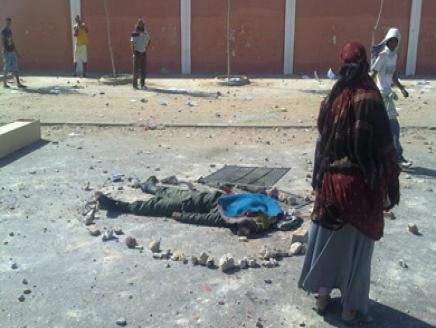
The battle has left several dead on the road and many injured, although the figures vary according to the sources of information. The Ambassador of the Sahrawi Arabian Democratic Republic in Algeria, Brahim Ghali, has assured told the Spanish government that he can only confirm one death in the Western Sahara, despite earlier reports that up to 13 Sahrawi died during the camp clearence. The dead man is a young Saharawi of 26 years, Babi Mahmud el Gargar, who died in the taking over of the camp, according to a report from the Polisario Front, the independence group fighting for Sahrawi rights, who also released the photo that accompanies this story, of Mr el Gargar’s body.
However, Sahrawi sources in Laayoune (still called by its colonial name of El Aaiún in Spanish) speak of four bodies in the camp, including a minor. Meanwhile, the Polisario Front representative in Spain, Bucharaya Beyun, raised the total to 13 dead.
Moreover, according to Gali, there are 70 detainees, 80 injured (whose severity is unknown) and several missing, and he said he does not know if there are more fatalities.
For its part, the Moroccan government has announced that five agents of law enforcement (one of them stoned to death and another burnt alive) were killed during the operation of dismantling the protest camp, located 15 kilometers from Laayoune, the capital of Western Sahara.
An agent of the Moroccan Royal Gendarmerie and one of the Auxiliary Forces (under the Ministry of Interior) died late in the afternoon in hospital of wounds sustained in the dismantling of the Saharawi camp. Also, according to official news agency MAP, there are nearly 60 wounded among the security forces.
A city in flames as the population riots
Civilians have erected barricades in Laayoune and now clashes are occurring between groups of youths and the security forces.
« The people of El Aaiun are out on the streets and have raised barricades. The streets are shattered and there is a huge cloud of smoke hanging over the town. The city is in flames, » said Isabel Terraza, a Spanish national involved in the Sahrawi resistance movement and who had been in the camp today.
It all started around 7 am Monday morning when the Moroccan army began forcibly dismantle the protest camp ‘Gdeim Izik‘, erected by 20,000 Sahrawi’s asking for improvements in their social and economic conditions. It was the biggest protest in the country since Spain abandoned it’s former colony in 1975.
From a helicopter, the security forces warned the Moroccan population by loudspeaker to leave the camp. Later, they used trucks to spray the tents with hot water, tear gas and set fire to part of the camp.
« The camp is gone. They have destroyed all the tents. There is no one left standing there. Soldiers violently entered and beat people, » Isabel reported via mobile phone, one of four Spaniards in the Western Sahara.
After the dismantling of the camp, the population of the camp retreated back to Laayoune and moved the resistance there. Moroccan security forces have been searching « every house » in certain neighborhoods in Laayoune and are arming the Moroccan settlers living in the area.
Sahrawi sources say that the Moroccan officials are shooting at them from their vehicles and then pick them up and put them in trucks. « They are attacking everyone, children, women, men, elders. It’s a melee against all Saharawi citizens. They are destroying their tents and part of the settlement is burning. Women are terrified, but do not want to flee because they fear that their husbands will die, that they will kill their children » from a spokeswoman for the Sahara group Thawra.
According to two of the main Moroccan Associations in Western Sahara, « hundreds of civilians [Moroccan] have joined police agents against Sahrawi activists » in the city. According to the Moroccan police, in the clashes in Laayoune « several members of the security forces have been wounded. » The prefect of police in Laayoune, Mohamed Djisi denied that there had been civilian casualties in the fighting.
The most serious civil unrest in Morocco’s history
Today is the most serious incident in the Western Sahara, after the ceasefire of September 1991 which ended the fighting between Morocco and the Frente Polisario independence group.
The Saharawi protest camp was erected only three weeks ago. More than 25,000 Sahrawi arrived and erected some 7,500 tents in which to live. Their demands were socioeconomic in nature, although many residents did not hide their links with the Saharawi cause. Until now, the moment of maximum tension occurred last Oct. 24 when a young Saharawi, 14, was shot by the Moroccan army when he tried to enter the camp.
Interestingly, a year ago, the Spanish Government also saw a conflict with Morocco when the Sahrawi activist Haidar embarresed Zapatero’s government by carrying out a hunger strike in Lanzarote airport after being refused entry into Morocco. After a month on hunger strike, Haidar was finally able to land at Laayoune after arduous negotiations between Spain and Rabat. In the agreement between both countries, the Spanish government recognized that Moroccan law prevailed in the Sahara.
Planned UN negotiations go ahead in New York
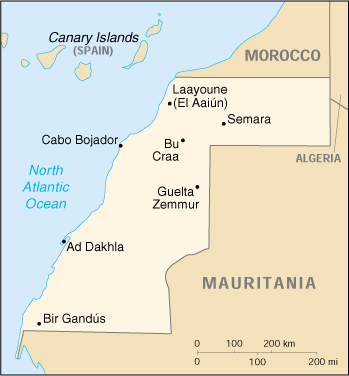
El-Aaiún (also transliterated « Laâyoune » or « El Ayun »; lit. « The Springs », is a city in Western Sahara founded by the Spanish in 1928. Administered by Morocco since 1976, El-Aaiún is the capital of what the Moroccan government calls the region of Laâyoune-Boujdour-Sakia El Hamra, and which the Polisario Front calls the « Occupied Territories ». It is also claimed by the Sahrawi Arab Democratic Republic as their capital.
The government in exile is run by the Polisario Front, which for decades waged a guerrilla war on Morocco in a bid to gain independence for the desert region and its native Saharawi people.
Morocco annexed the territory after Spain gave it up in 1975. Today, Morocco refers to the Western Sahara, thought to be rich with minerals, as its « southern provinces. » In a bid to finally settle the dispute, Morocco has proposed autonomy for the territory.
Monday’s unrest began hours before the reopening of informal U.N.-sponsored talks Monday in Manhasset, New York, between Morocco and the Polisario Front.
The 35-year-old conflict over the impoverished territory has dragged on despite United Nations’ attempts to resolve it. Today, thousands of Saharawis live in Polisario-run refugee camps in Algeria, forced out of their homeland by the dispute.
Despite the destruction of the camp and the unrest, UN sponsored talks between Rabat and the Polisario Front eventually started as scheduled this evening in New York.
Explosion de violence au Sahara occidental
THE ASSOCIATED PRESS
DANIEL WOOLLS, HASSAN ALAOUI,
08 novembre 2010
RABAT, Maroc – Cinq membres des forces de l’ordre marocaines et un manifestant ont été tués, lundi, lors d’une rafle menée par les autorités marocaines dans un camp de manifestants du Sahara occidental.
Les forces marocaines ont investi le camp à l’aube et auraient fait usage de gaz lacrymogènes et de canons à eau pour le démanteler. L’émeute a ensuite atteint la ville de Laâyoune; la télévision nationale espagnole a montré des images de fumée noire s’échappant d’au moins quatre édifices et d’une explosion qui a projeté des flammes dans les airs.
Ces scènes de chaos surviennent après des semaines de tensions larvées au Sahara occidental, où un mouvement d’indépendance, le Front Polisario, est en conflit avec le Maroc, qui revendique la souveraineté sur le territoire annexé en 1975.
Les troubles ont par ailleurs eu lieu à quelques heures de la réouverture, à New York, de pourparlers informels parrainés par l’ONU entre le gouvernement marocain et le Front Polisario.
Le conflit vieux de 35 ans au sujet de ce territoire désertique traîne en longueur, malgré les tentatives des Nations unies de le résoudre. Des milliers de Sahraouis chassés de chez eux à cause du conflit vivent aujourd’hui dans des camps de réfugiés gérés par le Front Polisario en Algérie.
Les dernières tensions ont émergé à la mi-octobre, quand des résidants de Laâyoune ont mis sur pied un camp à Gdim Izik, à 10 kilomètres de la ville, pour protester contre leurs conditions de vie. L’opération de lundi pour démanteler le camp a pris moins d’une heure, selon une radio marocaine.
«C’était une intervention très musclée», a expliqué Ghalia Djimi, une militante sahraouie des droits de la personne. «Des gens ont été battus. Il y a des blessés.»
L’organisation caritative britannique Sandblast a qualifié l’opération de «brutale». Le camp aurait été assailli par des gaz lacrymogènes, des flammes et des lancesà incendie, selon l’organisation.
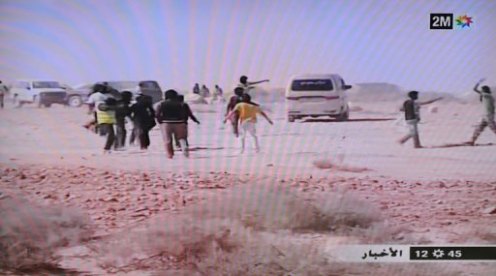
Le gouverneur marocain de Laâyoune, Mohamed Guelmous, a affirmé à la chaîne de télévision marocaine 2M que les troupes marocaines avaient été accueillies par un barrage d’engins incendiaires quand elles sont entrées dans le camp pour arrêter les «fauteurs de troubles».
Le Maroc a annexé le Sahara occidental en 1975, après le retrait espagnol du territoire. Aujourd’hui, le gouvernement marocain réfère au Sahara occidental en tant que «provinces du Sud». Dans une tentative de régler la dispute, le Maroc a proposé une plus grande autonomie au territoire, mais le Front Polisario réclame l’indépendance.
L’agence de presse officielle marocaine MAP a rapporté que cinq membres des forces de l’ordre avaient été tués lundi, quatre lors du démantèlement du camp et un autre poignardé à mort par des «vandales», et que plus d’une vingtaine d’autres avaient été hospitalisés.
Un manifestant a perdu la vie et des centaines de Sahraouis auraient été blessés, selon un communiqué du gouvernement sahraoui en exil relayé par l’agence Sahara Press Service. Le gouvernement sahraoui en exil est géré par le Front Polisario.
Les autorités marocaines insistent toutefois pour dire qu’aucun civil n’a été tué dans la rafle; le bilan exact des victimes reste donc incertain.
Un porte-parole du groupe qui a mis sur pied le camp, Brahim Ahmed, a déclaré que les manifestants avaient tué plusieurs membres des forces de sécurité marocaines – jusqu’à 16, a-t-il dit – en leur lançant des pierres ou en les écrasant avec leurs voitures. Il a aussi affirmé qu’un nombre indéterminé de résidants du camp avaient été tués.
Les bilans des victimes ont souvent été divergents tout au long du conflit au Sahara occidental, où l’accès des médias est limité. Un photographe de l’Associated Press et plusieurs autres journalistes ont été empêchés de prendre l’avion à destination du territoire par un responsable de Royal Air Maroc, le transporteur aérien marocain.
Les écoles et les bureaux étaient fermés lundi à Laâyoune. Un responsable de la ville a déclaré à l’Associated Press qu’une station de télévision et des bureaux logeant une agence d’investissement régionale avaient été incendiés par les manifestants.
Sangrientos disturbios en El Aaiún tras arrasar Marruecos un campamento saharaui
Lne.es
Martes 09 de noviembre de 2010
Un civil y cinco policías mueren en el asalto – Cientos de colonos marroquíes se suman a la batalla callejera de la capital, de saldo incierto – Las partes siguen negociando en la ONU
Agencias / E. F.
El Aaiún, la capital del Sahara Occidental, era al cierre de esta edición, anoche, el escenario de una dantesca batalla campal entre saharauis, por un lado, y fuerzas de seguridad marroquíes respaldadas por cientos de colonos de esa nacionalidad que se sumaron a los enfrentamientos. Los choques, sin precedentes en la ciudad, han provocado, según testigos presenciales, un número indeterminado de muertos y decenas de heridos. Las autoridades marroquíes han negado que haya víctimas mortales.
Las informaciones, provenientes de testigos locales y miembros de ONG, son fragmentarias y difíciles de contrastar por el bloqueo informativo impuesto por Marruecos, que ha impedido a los periodistas acceder al escenario de los hechos.
La batalla de El Aaiún ha sido la continuación del desmantelamiento a sangre y fuego, ayer a primera hora de la mañana, del campamento de protesta instalado desde el 10 de octubre por los saharauis en las proximidades de la capital.
Más de 20.000 personas, entre ellas cuatro españoles, se habían concentrado en miles de jaimas en ese asentamiento improvisado para reclamar el acceso a un trabajo y una vivienda, y, en general, mejores condiciones de vida para la población saharaui.
El balance de víctimas del asalto marroquí al campamento saharaui es aún impreciso. Fuentes del Frente Polisario anunciaron la muerte de un joven de 26 años, Babi Mahmud el Gargar, durante la toma del campamento, así como cientos de heridos.
Marruecos, que niega que haya muerto ningún civil saharaui, eleva a cinco las víctimas mortales sufridas por sus fuerzas de seguridad: cuatro agentes habrían perdido la vida durante la intervención en Gdaim Izik (dos gendarmes, un miembro de las Fuerzas Auxiliares y otro de Protección Civil) y un quinto agente, de las Fuerzas Auxiliares, habría sido apuñalado en El Aaiún.
El asalto a Gdaim Izik se inició a las 07.15 horas locales (las 08.15 en España). Las fuerzas de seguridad pidieron primero por megáfonos que las mujeres y los niños desalojasen el campamento y, tras el rechazo de muchos a hacerlo, intervinieron con cañones de agua, gases lacrimógenos y porras, desencadenando una situación de extrema confusión. Helicópteros sobrevolaron el lugar lanzando agua hirviendo, mientras algunas jaimas comenzaron a arder, por causas aún no esclarecidas, sembrando pronto las llamas en buena parte del campamento.
Mientras, en El Aaiún centenares de personas comenzaron a salir a la céntrica avenida Smara para protestar por la intervención y colocaron barricadas, dando así inicio a una revuelta callejera que anoche aún seguía muy activa y en la que se han escuchado disparos de armas de fuego y explosiones de cócteles incendiarios.
Miles de los expulsados del arrasado campamento se dirigieron a la capital, donde muchos de ellos residen, y alimentaron una revuelta marcada por coches incendiados, barricadas, escaparates hechos añicos y mobiliario urbano destrozado. Los saharauis denunciaron anoche que las fuerzas marroquíes no han facilitado el auxilio a los heridos.
El estallido de la violencia en el Sahara se produjo después de un fin de semana de creciente tensión, que se inició con un discurso del rey de Marruecos, Mohamed VI, en el que advertía de la marroquinidad de la zona saharaui controlada por el rebelde Frente Polisario.
Pese a los enfrentamientos, la ONU logró ayer que se llevase a cabo la prevista tercera reunión informal entre Marruecos y el Frente Polisario. La ronda de conversaciones pretende desencallar las negociaciones, estancadas desde hace dos años, para encontrar una salida a un conflicto que dura ya 35 años, desde que, el 6 de noviembre de 1975, en plena agonía del general Franco, España se retiró del Sahara. El Gobierno de Madrid cedía así a la presión de Marruecos, que había lanzado contra la entonces provincia española a una marea humana en la conocida como Marcha Verde. Marruecos y Mauritania se repartieron el territorio y poco después este último país renunció a su parte.
Tres décadas y medio después, Marruecos pretende normalizar la situación convirtiendo al Sahara en una provincia autónoma. El Frente Polisario, que representa la resistencia saharaui y proclamó hace años la República Árabe Saharaui Democrática, pretende, por el contrario, que se cumpla la resolución de la ONU que dictaminó la necesidad de celebrar un referéndum sobre el futuro de un territorio rico en fostafos, con perspectivas de tener yacimientos de petróleo y poseedor de un importante banco pesquero en sus costas. Marruecos, fuertemente respaldado en sus pretensiones por Francia, ha ido dilatando la consulta, alegando problemas de censo, hasta situarla en vía muerta.
Camp residents protested for jobs, better living. Three killed in morocco raid on W. Sahara camp
alarabiya.net
Monday, 08 November 2010
RABAT (Agencies)
Morocco said a police officer and a firefighter died of stab wounds on Monday when security forces broke up a protest camp in Western Sahara, leading to the territory’s biggest anti-government demonstration in decades.
The camp’s destruction led to clashes in the city of Laayoune shortly before U.N.-mediated talks were due to start near New York to try to end the stalemate over Western Sahara, a former Spanish colony which Morocco annexed in 1975.
For the past month, thousands of protesters had been living in a tent camp on the outskirts of Laayoune demanding jobs and better living conditions.
Security forces moved into the camp early on Monday and dispersed its residents.
« The gendarme (paramilitary policeman) and the firefighter were killed as the security forces entered the camp. They were stabbed to death by individuals in the camp, » a Moroccan security official told Reuters
Mohamed Ghalous, the government representative for the Laayoune region, said the gendarmerie and auxiliary forces had moved in « to end a situation which had exhausted all means of dialogue, » by dismantling the camp.
Law enforcement officers arrived around dawn using high-powered water cannon to clear the camp and several ambulances were seen taking the injured to hospitals
An AFP reporter
The Polisario Front guerrilla movement, which seeks independence for the Western Sahara, accused the security forces of injuring hundreds of people in the dawn raid on the camp outside Laayoune.
The foreign minister in a self-appointed government for the territory, Mohamed Salem Ould Salek, said the attack « left hundreds of wounded. I can’t yet tell you the exact figure, notably if anyone was killed, but the hospitals are full. »
« Law enforcement officers arrived around dawn using high-powered water cannon to clear the camp and several ambulances were seen taking the injured to hospitals, » said an AFP reporter on the scene.
« Hundreds of women and children were seen outside the camp heading towards Laayoune but a certain number of Sahrawi (local) men refused to go, » said a witness.
Fighting between police and protestors spread to the streets of Laayoune, said a Moroccan head of a local non-government organization.
« The fighting started yesterday but was reignited when news of the assault on the camp was received, » he said.
The road from Laayoune to the camp was blocked by police to prevent people from the town going to the camp to help protestors.
« The camp is practically dispersed and the young people who refused to go were driven out by force following the intervention of the Moroccan authorities, » a Laayoune resident who had returned from the camp told AFP.
Western Sahara was annexed by Morocco after Spanish settlers withdrew in 1975. But the Polisario Front fought the Moroccan presence until the United Nations brokered a ceasefire in 1991.
The unrest comes as Morocco and the Polisario Front prepare to meet in Greentree in the New York suburbs Monday and Tuesday, the third time the two sides have met for such talks.
All previous talks between the two sides on the future of the territory have come to nothing.
The Polisario Front wants a UN-organized self-determination referendum, with independence as one of the options. Morocco has so far rejected any proposal that goes beyond greater autonomy.

Sahara occidental: 3 morts et 70 blessés lors d’affrontements près de Lâayoune
AFP
8 11 2010
LAAYOUNE — Trois membres des forces de sécurité marocaines ont été tués, ont affirmé les autorités marocaines, lors d’affrontements lundi avec des contestataires sahraouis prés de la ville de Lâayoune, chef-lieu du Sahara occidental.
Selon une source officielle marocaine, un gendarme, un policier et un sapeur pompier, ont été tués lorsque les forces de l’ordre ont donné l’assaut à un campement qui abritait des milliers de contestataires.
Cette même source a fait état de 70 blesssés sans préciser si ces victimes étaient dans les rangs des forces de l’ordre ou parmi les contestataires.
Les autorités marocaines ont entrepris lundi de démanteler ce campement de contestataires dressé près de Lâayoune, à 1200 km au sud-ouest de Rabat.
Les forces de l’ordre ont donné l’assaut à l’aube en utilisant des canons à eau contre les habitants du campement, et de violents incidents se sont produits par la suite dans la ville même, selon cette source officielle.
Plusieurs ambulances transportant des blessés vers Lâayoune ont été aperçues par le correspondant de l’AFP.
Le campement a été dressé le 19 octobre par des habitants de cette région pour protester contre « la détérioration » de leurs conditions de vie et réclamer « des emplois et des logements ».
Selon des ONG sur place, il abrite au moins 12.000 habitants.
Un comité chargé de la coordination avec les autorités marocaines l’avait présenté comme un « acte de protestation sociale », sans dimension politique.
Copyright © 2010 AFP.
ثلاثة قتلى و70 جريحا في هجوم للقوات المغربية على مخيم لمحتجين قرب العيون
AFP
8 11 2010
الرباط (ا ف ب) – اعلنت السلطات المغربية مقتل ثلاثة عناصر من قوات الامن، في مواجهات الاثنين مع محتجين صحراويين قرب مدينة العيون كبرى مدن الصحراء الغربية.
واوضح مصدر رسمي مغربي ان دركيا وشرطيا واطفائيا قتلوا حين هاجمت قوات الامن المخيم الذي يؤوي آلاف المحتجين. واضاف المصدر ان سبعين شخصا اصيبوا بجروح دون تحديد ما اذا كانوا من قوات الامن او المحتجين.
وكانت السلطات المغربية قررت ان تفكك الاثنين هذا المخيم الاحتجاجي الذي نصب قرب العيون على بعد 1200 كلم جنوب غربي الرباط. وقال المصدر الرسمي ان قوات الامن هجمت فجرا على المخيم مستخدمة خراطيم المياه ضد سكانه فحدثت مواجهات عنيفة اثر ذلك في المدينة.
وشاهد مراسل وكالة فرانس برس العديد من سيارات الاسعاف تنقل مصابين الى العيون. واقيم المخيم في 19 تشرين الاول/اكتوبر من قبل سكان المنطقة للاحتجاج على « تدهور » ظروفهم المعيشية وللمطالبة ب « وظائف وسكن ». وبحسب منظمة غير حكومية في المنطقة فان المخيم يؤوي ما لا يقل عن 12 الف شخص. وكانت لجنة مكلفة التنسيق مع السلطات المغربية قدمت المخيم باعتباره « تحرك احتجاجي اجتماعي » لا ينطوي على اي بعد سياسي.
من جهتها اتهمت جبهة البوليساريو القوات المغربية بالتسبب بسقوط « مئات الجرحى » في هجومها على المخيم. وقال « وزير الخارجية » الصحراوي محمد سالم ولد سالك لوكالة فرانس برس ان الهجوم اوقع « مئات الجرحى »، مضيفا « لا يمكنني بعد ان اقول لكم كم بالضبط ولا سيما في حال كان هناك قتلى، ولكن المستشفيات ملأى » بالجرحى.
واضاف ان القوات المغربية شنت الهجوم « برا وجوا بواسطة مروحيات » واستخدمت في هجومها « خراطيم المياه والغازات المسيلة للدموع والرصاص الحي »، مؤكدا انها « قمعت بطريقة شرسة وعشوائية السكان المدنيين العزل الذين يقيمون في المخيم ». واشار ولد سالك الى انه حتى بعد ظهر الاثنين كانت لا تزال هناك مجموعة من المحتجين « محاصرة » داخل المخيم « الذي دمر بالكامل ».
حقوق الطبع والنشر © 2010 AFP. جميع الحقوق محفوظة. المزيد »
Two killed, 70 hurt in raid on W.Sahara camp
AFP
8 11 2010
LAAYOUNE, Morocco — A paramilitary gendarme and a fireman were killed and almost 70 people badly injured on Monday when Moroccan forces raided a camp in the Western Sahara, a government official told AFP.
Mohamed Ghalous, the government representative for the Laayoune region, said the gendarmerie and auxiliary forces had moved in « to end a situation which had exhausted all means of dialogue. »
Moroccan police moved in early Monday to dismantle the camp housing some 12,000 people set up four weeks ago outside the main town in the Western Sahara, which was annexed by Morocco in the mid-1970s.
Fighting between police and protestors spread to the streets of Laayoune, the chief town in the Western Sahara, said a Moroccan head of a local non-government organisation.

Two dead, dozens injured after clashes in Western Sahara
BNO News
lundi 8 novembre 2010
RABAT, MOROCCO (BNO NEWS) — At least two people were killed and seventy others were hurt after violent clashes broke out between protesters and Moroccan security forces in the disputed territory in the Western Sahara, officials said on Monday.
Police dispersed the protesting camp of the Polisario Front on the outskirts of the city of Laayoune, the region’s main city. The camp, which was made up of around 12,000 people, refused several orders to leave the area, moments before talks in New York about the future of the disputed phosphate-rich territory.
Morocco, which annexed the territory in 1975, is seeking autonomy for the area, while the Polisario Front has been seeking independence for the Western Sahara. For decades, both sides have had confrontations.
During the unrest, two fires were seen in the city, and hundreds of people fought with police officers throughout the streets of Laayoune. Morocco’s official news agency said two security personnel were killed, while 70 others had been injured.
The Western Sahara region was a Spanish colony but, after it withdrew, Morocco annexed the region. Polisario Front has fought a guerrilla war against Morocco until the United Nations negotiated a ceasefire in 1991.
Au moins un mort et une centaine de blessés sahraouis à El Ayoun
elwatan.com
08.11.10
La situation dans les territoires occupés du Sahara Occidental est très inquiétante. Un jeune sahraoui a trouvé la mort ce lundi 08 novembre lors des manifestations pacifiques qui se sont déclenchées spontanément au moment où les forces armées marocaines démantelaient le camp de Gdeim Iziz à l’aube du lundi.
Selon des sources officielles sahraouies « des dizaines de blessés », dont des cas graves, sont à déplorer au cours de ces affrontements avec les manifestants sahraouis, sortis dans les rues de plusieurs quartiers populaires de la ville occupée pour dénoncer l’attaque matinale contre le camp de Gdeim Izizk.
Des témoins oculaires ont affirmé que les forces marocaines ont utilisé des balles réelles contre les manifestants, affirme la même source qui précise que le nombre de morts peu s’alourdir.
La presse espagnole parle de 13 morts et d’une centaines de blessés parmi les citoyens civils sahraouis et de trois decès parmi les agents des forces d’occupation marocaines.
Les forces de sécurité marocaines épaulées par les forces armées ont pénétré en force, à l’aube de ce lundi, le camp de Gdeim Izizk et l’ont mis à sac en utilisant des bombes lacrymogènes balancées par des hélicoptères et des jets d’eau de citernes à l’heure où les 20.000 personnes dormaient encore dans ce camp sit-in, dressé depuis le 9 octobre dernier à 12 Kms à l’est de la capitale sahraouie occupée.
« Plusieurs personnes ont été blessées parmi la population du camp, dont des femmes, des enfants et des vieillards, surpris dans leur sommeil et asphyxiés par les gaz lacrymogènes dont ont fait usage les forces marocaines, armées de matraques », a témoigné un résident du camp joint par téléphone par SPS.
« C’est un génocide contre nous, ils (les forces marocaines) ne font pas de distinction, les femmes et les enfants n’ont pas été épargnés », a indiqué Ahmed Moussaoui, défenseur des droits humains, avant que la communication téléphonique ne soit coupée
Le gouvernement de la République arabe sahraouie démocratique (RASD) qualifie de « crime inqualifiable » et d' »acte barbare » l’attaque de ce lundi et lance un « appel urgent » au Conseil de sécurité de l’ONU pour qu’il exige du Maroc de mettre terme à cette agression.
La RASD lance également un appel à toutes les organisations de défense des droits de l’homme, de la société civile et à tous les milieux épris de paix et de justice à travers le monde pour « venir en aide à une population en détresse ». « Il est condamnable que tout cela se passe au vu et au su de la MINURSO sans qu’elle ne se prononce ou, au moins, informe l’opinion internationale », déplore, par ailleurs, la RASD.
Rabah Beldjenna

Informations
Laâyoune (en arabe : العيون [Al ʿAīūn], El Aaiún ou El-Ayoun, littéralement : « les yeux » ou « les sources ») est la ville la plus importante du Sahara occidental الصحراء الغربية
. Elle est située au bord de l’Atlantique, à 500 km au sud d’Agadir et à 400 km à l’ouest de Tindouf, sur la route menant à Dakhla. Elle est contrôlée et administrée par le Maroc depuis 1975 ; elle est le chef-lieu de la province de Laâyoune et de la région Laâyoune-Boujdour-Sakia El Hamra, une des « provinces du Sud ».



 anthropologie du présent
L’Algérie est responsable des dérives perpétrées contre des Marocains du Sud ,par des pseudos sahraouis endoctrinés dans les camps de Tindouf par la junte militaire algérienne dont le président n’est qu’une marionnette. Nous condamnons ces agissements illégaux des autorités algériennes à l’encontre du peuple marocain .Ahmed Hayzoun
the morrocan goverment lies about the sahrawi victime it almost about 150 person die and 700 kidnap iam sahrawi women i laayoun
The recent incidents at the Gadaym Izik camp in Laayoune city in western Sahara
The Independent Commission For The Defense Of Human Rights In Western Sahara has watched and reported the development at the Gadaym Izik camp in Laayoune city in Western Sahara from the first day, denouncing the unethical and unprofessional way by which some Spanish media treated the incidents related to Gadaym Izik camp in Laayoune city .
Thousands of Saharawi people (people from the Western Sahara) left their homes to set up camp fifteen kilometres from El Aaaiun city, in protest against the social policy of the Moroccan government In the southern provinces kown as Western Sahara.They claimed that » While Morocco offers benefits to refugees returning from the human rights violations of Tindouf camps in Algeria , many Sahrawis who never left Morocco have not yet received anything. » The Sahrawi demonstrators wanted Morocco to ensure their right to employment, housing and a decent living. « We are not against giving privileges to our brothers returning from the camps of Tindouf. We also recognise their suffering endured in the camps, and the risks they have taken during their escape from the Algerian camps through the miles of desert to their homeland ( Morocco). However, we as indigenous residents feel the oppression because no one cares about us and the suffering of our youth from unemployment and neglect and the difficulty of living, » Mohammed Salem Salek told The I.C.D.H.R. in Sahara.
However, when the Moroccan government,that has spent billions of dirhams on Western Sahara,started to solve the social problems of the protesters,some traffickers, gangs and opportunists serving the foreign agendas of the Polisario separatists and their mentor Algeria resorted to blackmail and violence to prevent people from leaving the camp.
The Moroccan security forces,who were in a difficult situation of self-defense and, which left 10 painful casualties among them, did not fire a single gunshot in their intervention. 70 elements of the security forces have been injured .
We need to remember that the Kingdom of Morocco launched an innovative and imaginative plan, in April 2007, to offer its Southern Provinces of the Sahara autonomy and self-determination within the context of Moroccan Sovereignty.Many great countries such as The United States and France reiterate that Morocco’s proposal to grant substantial autonomy to its Southern provinces, known as the Sahara, is likely to help find a solution to the 35-year dispute over the former Spanish colony, with Washington dismissing as « unrealistic » the establishment of an independent state in the region as called for by the Polisario separatists and their mentor Algeria.The Moroccan proposal offers the people of the Sahara, the Sahrawis, the opportunity to run their own affairs democratically through their representative legislative, executive and judicial bodies, while benefiting from Moroccan sovereignty in matters of foreign affairs and defence.This Initiative for the Sahara region will enable the Sahrawi People to achieve self-determination through free, modern and democratic means, and accords with both international law and internationally accepted norms and standards. It is the resolution of this thirty-five-year conflict, that will facilitate the economic and democratic development of the whole Maghreb and help to promote peace, security and stability in North Africa.
The Initiative was launched to overcome the deadlock in United Nations’ mediated negotiations between the Kingdom of Morocco and the Republic of Algeria and their proxy the Polisario Front. As the work of several United Nations’ Secretaries-General and their Personal Envoys to the region have failed to reach a mutually-acceptable solution, the Kingdom of Morocco drew up the Initiative for negotiated autonomy for the Sahara to reach a lasting political solution to the conflict.