
Emeute contre les prix alimentaires à Maputo – septembre 2010
>>les vidéos<<
Mozambique: timide normalisation à Maputo après deux jours d’émeutes contre la vie chère
AFP
3 09 2010
MAPUTO — L’activité reprenait timidement vendredi à Maputo où de longues files d’attente se formaient devant les magasins fermés pendant deux jours d’émeutes contre la vie chère qui ont fait au moins sept morts et 288 blessés.
Après deux jours de heurts, la nuit a été calme dans la capitale mozambicaine, a constaté le directeur des services d’urgence de l’hôpital central de Maputo, Antonio Assis da Costa.
« A partir de 21h00 (19h00 GMT jeudi), les choses se sont calmées », a déclaré M. da Costa à l’AFP, soulignant que les derniers patients blessés dans les affrontements entre manifestants et forces de l’ordre avaient été admis vers minuit.
« Maintenant (vendredi matin), je ne vois plus que des cas normaux, plus personne venant des émeutes », a-t-il ajouté.
L’annonce d’une hausse de 17% (bien 17%) du prix du pain la semaine prochaine avait embrasé mercredi les quartiers pauvres de Maputo, jetant des milliers de personnes dans les rues.
La journée de jeudi a été encore émaillée d’incidents. Entre 7h00 et 19h00 jeudi, les services d’urgence ont admis une quarantaine de patients, dont 32 blessés par des balles de caoutchouc, a précisé M. da Costa.
Au plus fort des émeutes mercredi, la police avait tiré à balles réelles sur la foule, selon les témoignages concordants de manifestants et personnels de santé, ce que démentent les forces de l’ordre.
Selon le dernier bilan officiel, publié à la mi-journée jeudi, sept personnes ont été tuées et 288 blessées dans les affrontements.
Malgré un retour apparent à la normale, la colère était toujours perceptible vendredi matin. « Les gens n’ont pas d’argent pour acheter de la nourriture », s’emportait Elisa Aldino, 48 ans, interrogée par l’AFP alors qu’elle faisait la queue devant une boulangerie.
« Quand on n’a pas d’argent, on dort sans manger », ajoutait cette femme de ménage, venue du quartier pauvre de Maxaquene où les magasins n’ont pas rouvert.
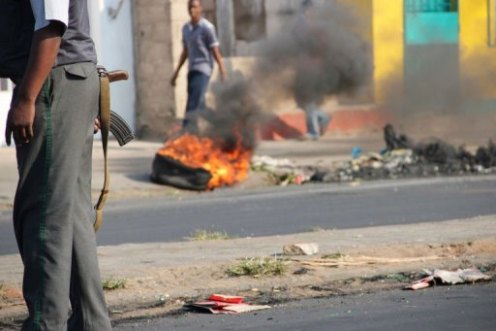
Devant les stations-service du centre-ville, les automobilistes patientaient des heures pour faire le plein. Les grandes artères, bloquées depuis deux jours par des barricades de pneus enflammés, avaient été dégagées.
Overnight clashes in Maputo as riots continue
eyewitnessnews.co.za
3 09 2010
Rioting continued in Mozambique’s capital Maputo on Thursday night as residents protested against increases in living costs. Seven people were killed during the violent demonstrations.
Mozambicans went on strike on Wednesday after bread prices rose by 17 percent and increases in the cost of water and electricity.
Nearly 300 people were wounded during the violent riots which have rocked Maputo.
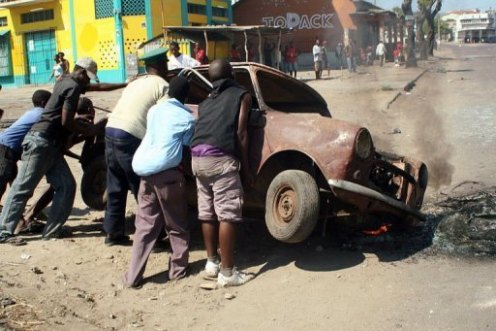
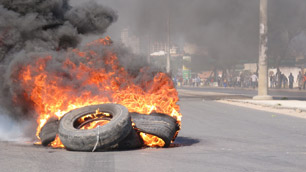
There were running battles between police and protestors who blockaded roads in Maputo with rocks and burning tyres.
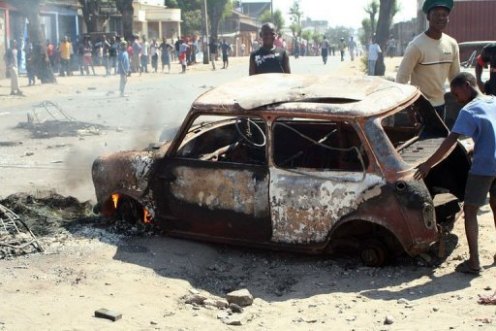
Demonstrators also looted shops and damaged property. Four electrical substations were set alight and two petrol stations vandalised.
The first day of rioting caused damage estimated at R24 million but Mozambique’s government said the price increases were irreversible and called for calm among residents.
Meanwhile, South African Airways (SAA) flights to and from Maputo were still operating.
Mozambique: le gouvernement maintient les hausses des prix, malgré des émeutes et sept morts
AFP
1 02 2010
MAPUTO — Le gouvernement mozambicain a refusé jeudi de revenir sur les hausses des prix du pain et de l’énergie en dépit des émeutes qui se sont soldées par sept morts et 288 blessés en deux jours à Maputo, selon le dernier bilan officiel.
« Les hausses de prix sont irréversibles », a affirmé le porte-parole du gouvernement, Alberto Nkutumula, s’exprimant devant la presse à l’issue d’une réunion extraordinaire du conseil des ministres.
Des milliers de personnes sont descendues dans la rue mercredi, alertés par des textos qui se sont diffusés d’un téléphone à l’autre dans les quartiers pauvres de la capitale lorsque les médias officiels ont annoncé pour la semaine prochaine une hausse de 25% des prix du pain.
Le gouvernement avait déjà imposé ces dernières semaines de fortes hausses de l’électricité et de l’eau.
Les manifestations ont rapidement tourné à l’émeute et ont été sévèrement réprimées par la police qui a, selon de nombreux témoignages, tiré à balles réelles sur la foule. Les heurts, qui se sont poursuivis toute la nuit, continuaient jeudi sporadiquement dans les bidonvilles.
Les émeutes « ont causé de lourdes pertes humaines et matérielles, dont six morts hier (mercredi) et un aujourd’hui, 288 blessés, 23 magasins assaillis et pillés, 12 bus vandalisés, dont l’un a été complètement détruit, et deux wagons de train », a détaillé M. Nkutumula.
Le conseil des ministres appelle « tous les citoyens à s’abstenir de participer aux actes d’émeutes, de vandalisme, de pillage et de violence, afin de permettre un retour rapide à la normalité et au calme », a-t-il dit.
Les écoliers en uniforme, nombreux la veille sur les barricades, ont repris jeudi le chemin des classes. Mais des patrouilles de police lourdement armées parcouraient les rues dans des camionnettes ouvertes, dispersant le moindre attroupement dans la capitale mozambicaine.
La télévision publique montrait encore des images d’affrontements isolés entre forces de l’ordre et manifestants. « Ce n’est pas encore fini », soulignait un vendeur de rue du grand faubourg de Matola, Lulu Paulo Luis.
Des textos circulaient toujours pour encourager les gens à poursuivre une grève générale pendant les trois jours à venir, a constaté l’AFP.
Selon le porte-parole gouvernemental, le mouvement a déjà coûté 122 millions de meticais (3,33 millions de dollars) à l’économie du pays.
En 2008 déjà, six personnes avaient été tuées dans des émeutes contre la hausse des prix des taxis collectifs, qu’empruntent les plus pauvres pour se rendre au travail.
Mais les troubles semblaient cette fois « plus graves que ceux de 2008 », a estimé jeudi le porte-parole de la Croix-rouge nationale, Americo Ubisse, « parce qu’ils atteignent tous les bidonvilles » de la capitale. « Ca se calme, et puis ça repart de plus belle », a-t-il remarqué.
Le Mozambique, dévasté par la longue guerre civile (1976-1992) qui a suivi le conflit armé pour l’indépendance de l’ancienne colonie portugaise, connaît une misère alarmante. 65% de ses 20 millions d’habitants vivent sous le seuil de pauvreté.
Les prix ont flambé ces derniers mois en raison de la hausse mondiale du blé mais aussi de la dépréciation de la devise nationale par rapport au rand sud-africain. Le pays dépend étroitement des importations venues de son grand voisin.
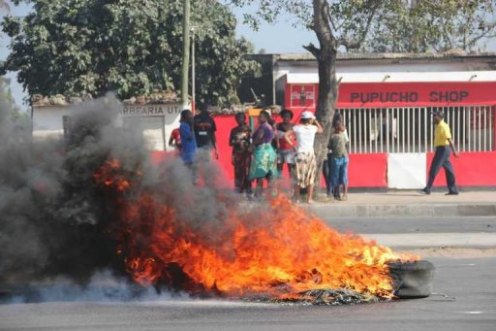
Manifestations contre la vie chère à Maputo: quatre morts, 27 blessés
AFP
1 09 2010
MAPUTO — Quatre personnes ont été tuées par balles et 27 ont été blessées au cours d’émeutes contre la vie chère mercredi à Maputo, selon la police mozambicaine qui dément de nombreux témoignages affirmant qu’elle a fait feu sur les manifestants.
« Quatre personnes ont été tuées, 142 ont été arrêtées et 27 blessées, dont deux policiers », a indiqué devant la presse le porte-parole de la police nationale, Pedro Cossa, précisant qu’il s’agissait d’un bilan encore provisoire.
Les victimes ont été tuées par balles, a confirmé M. Cossa. Mais il a laissé entendre qu’il ne pouvait s’agir de munitions de la police, qui utilise selon lui « toujours des balles en caoutchouc ».
La Croix-rouge nationale comme le directeur des services d’urgences à l’hôpital central de Maputo, Antonio Assis da Costa, ont constaté de nombreuses blessures par balles.
Selon des témoignages concordants, la police a d’abord eu recours aux balles en caoutchouc pour disperser les foules, avant de passer aux munitions réelles.
Le correspondant de l’AFP a constaté la mort d’un garçon de 12 ans, le crâne fracassé par un tir. L’enfant gisait dans une mare de sang, son sac d’école ouvert laissant apparaître un livre de classe.
Le garçon regardait la foule, des milliers de personnes en train de manifester en chantant et dansant, lorsqu’il a été atteint par une balle derrière la tête, a raconté un témoin, Eunici Antonia Kiove, 18 ans.
« Nous l’avons tous vu », a-t-il ajouté. « Nous voulons que justice soit faite! »
Les violences ont éclaté lorsque des milliers de personnes sont descendues dans les rues des faubourgs pauvres de la capitale pour protester contre la hausse des prix du pétrole, du blé, du pain, de l’eau et de l’électricité.
« Nous protestons contre le coût de la vie. Ce n’est même plus élevé, c’est insupportable!, s’emportait Sousa Langa, 53 ans.
Des manifestants avaient bloqué, à l’aide de pneus enflammés, les routes principales conduisant à l’aéroport et à la plus grande banlieue de Maputo, Matola. Parmi eux figuraient de nombreux adolescents vêtus de leurs uniformes d’écolier.
Des dizaines de magasins et stations-service de Maputo, où vivent un million d’habitants, ont été attaqués par des pillards tandis que les manifestants mettaient le feu à des voitures.
Dans la soirée, des coups de feu continuaient de retentir dans les quartiers pauvres, dont les émeutiers avaient barricadé les grands axes, a constaté l’AFP.
La police a indiqué qu’elle maintenait ses patrouilles.
L’ambassade d’Afrique du Sud à Maputo a préféré fermer ses portes provisoirement, a indiqué à Pretoria le porte-parole du ministère des Affaires étrangères, Saul Molobi. « Nous réévaluerons la situation demain (jeudi) », a-t-il précisé.
Le ministre mozambicain de l’Intérieur, Jose Pacheco, s’est élevé à la télévision nationale contre les « criminels et hors-la-loi », qui ont manifesté à la suite d’appels relayés par SMS.
Tout en condamnant les pillages, le porte-parole de la Renamo, Fernando Mazanga, a dénoncé un « gouvernement qui ne sait répondre aux manifestations que par la violence. »
Le Mozambique, dévasté par la longue guerre civile (1976-1992) qui a suivi le conflit armé pour l’indépendance, connaît une misère alarmante. 65% de ses 20 millions d’habitants vivent sous le seuil de pauvreté.
Les prix ont flambé ces derniers mois avec la dépréciation du metical, la monnaie nationale, par rapport au rand sud-africain. Le Mozambique dépend étroitement des importations venues de son grand voisin.
En 2008, six personnes avaient été tuées dans des émeutes contre la hausse des prix des taxis collectifs, qu’empruntent les plus pauvres pour se rendre au travail.
Mozambique police fire at crowds protesting high prices; 7 dead
CP
1 09 2010
MAPUTO, Mozambique — Young men angry over the rising cost of food, fuel and water rampaged through Mozambique’s capital Wednesday, throwing stones, looting shops and drawing police fire that killed at least seven people.
Rising prices around the world have raised concerns about a return to the political instability of 2008, when Haiti, Kenya and Somalia were among impoverished countries that saw rioting over the cost of living.
Egypt, where rioting also broke out in 2008, has in recent months seen protests over rising food prices. The U.N. said Wednesday that international food prices have risen to their highest in two years.
Mozambican police had declared Wednesday’s marches illegal, saying no group sought permission for them. For days, word of the protests had been spread, in some cases by cellphone message, in this former Portuguese colony in southeast Africa.
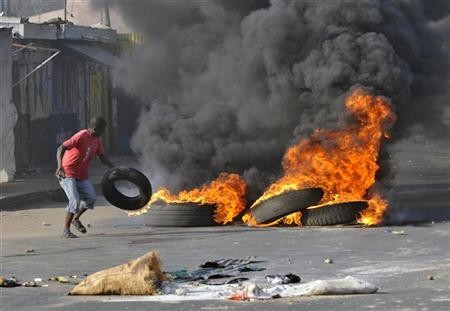
Thousands of people, mostly young men, turned out.
« This strike is about the hike in prices. More than that, it’s about injustice, » said one protester, 34-year-old Albino Mkwate.
Parts of the capital descended into chaos, with women crying in anguish at the violence and protesters running through the streets carrying the wounded. A boy of about 12 could be seen lying motionless on a Maputo street in a pool of blood.
Horatio Antonio, a 45-year-old unemployed man, said he saw police open fire on protesters without provocation.
« People are angry because prices are going up: petrol, rice, water, electricity, everything, » Antonio said.
A witness described a women running along the road to the airport after the riots, rubbing her stomach and saying, « We are hungry, all Mozambicans are hungry. »
State television said police shot and killed seven people, including a girl of about six who was on her way home from school and another girl whose age and the circumstances of death were not given.
Alice Caisane, a Maputo hospital medical chief, told state TV that four of the victims died at her hospital and 16 were treated for gunshot injuries.
Pedro Cossa, a spokesman for the police ministry, said he had heard the TV and radio casualty reports, but he was still awaiting word from officers. He said police had fired with both rubber bullets and live ammunition, and at times had been under attack by protesters.
While there were no calls for more protests, Cossa said he feared unrest would continue.
Mozambicans have seen the price of a loaf of bread rise by 25 per cent, from four to five meticais (from about 11 cents to about 13 U.S. cents) in the past year. Fuel and water costs also have risen.
The Rome-based U.N. Food and Agriculture Organization said Wednesday its global food price index shot up 5 per cent between July and August.
The FAO’s Abdulreza Abbassian said there are sharp differences between the current price situation and the spring of 2008, when high oil prices and growing demand for biofuels pushed world food stocks to their lowest levels since 1982.
FAO says it has recently further cut its forecast for 2010 world wheat production since its last update on Aug. 4, putting this year’s wheat crop at 648 million tons, down 5 per cent from 2009 but still the third highest ever. This reflects a cut in drought-hit Russia’s harvest estimate from 48 million tons to 43 million tons, more than offsetting higher forecasts in the U.S. and China.
Critics say bad government decisions are making shortages worse and accuse producers of colluding to push up prices.
Mozambique’s FRELIMO party, in power since independence from Portugal in 1975, has been plagued by charges its government is corrupt and inefficient.
In 2008 in Mozambique, after a week of clashes between police and rioters that killed at least four people and seriously injured more than 100, the government cut fuel prices.
Mozambique was left in ruins by a civil war that broke out after independence from Portugal in 1975 and lasted for 17 years. AIDS, outbreaks of diseases like cholera and frequent natural disasters strain the government’s resources. More than half the population lives in poverty, and Mozambique ranks 175th of 179 countries on the U.N. Human Development Index, a measure of progress that takes into account health and education levels as well as income.
Mozambique’s per capita GDP is just $802, compared to $9,757 in neighbouring South Africa, where many Mozambicans have fled in search of work.
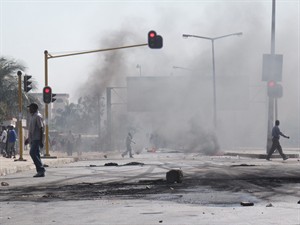
At least 6 killed in Mozambique price riots
ibtimes.com
September 2, 2010
Two children were shot dead and at least four more people were killed in clashes between police and rioters across Mozambique‘s capital Maputo on Wednesday in protests over rising prices, police and hospital sources said.
Police used teargas to disperse crowds and fired live ammunition after running out of rubber bullets, while protesters blocked roads and burned tyres, police officials said.
The violence was the worst in the impoverished southern African country since 2008.
« Two children have been killed in the suburb of Mafalala, » police spokesman Arnaldo Chefo told Reuters. Police officially said three people were killed while hospital and police sources said the death toll was at least six.
The protests appeared to have been touched off when the government boosted prices on bread by 30 percent on Wednesday. The increase came as wheat prices have shot up around the world.
Residents of one of the world’s poorest countries say they have been hit hard by rising costs for basic necessities including bread, with soaring costs for fuel and other essentials adding to their troubles.
Mozambique also is heavily dependent on imports from South Africa, which have become more expensive in recent months as the South African rand currency has strengthened.
« I can hardly feed myself. I will join the protest because I’m outraged by this high cost of living, » Nelfa Temoteo, who lives in the capital’s densely populated Malhazine suburb, said.
Maputo police called for calm as the riots spread throughout the city of 1.2 million people.
« There is looting and vandalisation. Shops including banks in the Central Business District are closed, » Chefo said.
In 2008, at least six people were killed in Mozambique in protests in over high fuel prices and living costs. The government agreed to cut the price of diesel fuel for minibus taxis.
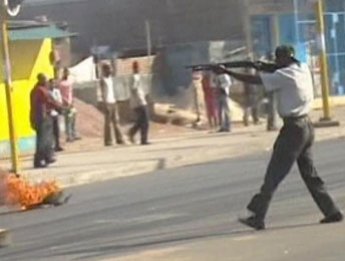
Mozambique police kill 6 in food price protest
The Associated Press
Wednesday, September 1, 2010 | 11:04 AM ET
Police opened fire and killed six people after stone-throwing mobs filled the streets of Mozambique’s capital city Wednesday to protest rising food prices.
The marches were illegal and no group had sought permission to hold them, police said.
Thousands of people, mostly men, lined the streets north of downtown Maputo, burning tires and looting shops as they made their way into the city centre.
Police appealed for calm and said they had made an unspecified number of arrests. Youths were blocking streets and public transport drivers abandoned their vehicles in the streets.
International food prices are at their highest in two years, the UN’s Food and Agriculture Organization said Wednesday.
In Mozambique, the price of a loaf of bread rose 25 per cent in the past year to about 14 cents. Fuel and water costs also rose.
The FAO’s food price index shot up five per cent between July and August, partly because of a drought in Russia that lifted the cost of wheat, it said.
The international food price surge also reflects higher sugar and oilseed prices, the FAO said.
Government blamed for high prices
In Mozambique, critics say bad government decisions have made shortages worse and have accused producers of colluding to push prices up.
The FRELIMO party, in power since Mozambique won independence from Portugal in 1975, has been plagued by charges its government is corrupt and inefficient.
Violent protests over high costs erupted in Maputo in 2008, as well, when global food prices jumped. The government cut fuel prices after a week of clashes police and rioters that left four people dead and more than 100 seriously injured.
Three dead in Moz price hike riots
timeslive.co.za
Sep 1, 2010 6
Three people have been confirmed dead and dozens injured in riots during protests over price hikes in Maputo, Mozambique, officials said.
Mozambican Red Cross spokesman Americo Ubisse told Sapa that Red Cross teams found two people shot dead in the street and 29 wounded. The wounded were taken to hospital.
Central Maputo Hospital director of medical emergencies Dr Antonio Assis da Costa said they had treated 42 patients.
Twenty-three were for gunshot wounds, 19 for physical attacks and a woman student died of her wounds in the hospital.
Mozambicans went on a mass strike in and around the capital Maputo on Wednesday to protest against an increase in living costs.
Bread, water and electricity were among the basics which have shown price hikes following fuel price increases and the devaluation of the national currency, the metical, against the rand.
The metical was 4.3 to the rand in March, and now five.
Taxi drivers were also striking and schools were closed.
Although the centre of the city was calm, there was violence in the townships around the capital.
Major roads in and out of Maputo had been barricaded with burning tyres.
Hundreds of people lined the streets and police opened fire with live and rubber bullets when people started protesting.
A Sapa reporter saw a 12-year-old boy, shot dead, lying on the ground.
He had been hit from behind in the head when he returned from school as police opened fire on a crowd.
His aunt Lola Simbine, 23, when asked how he had died, held up an empty bullet casing. She said she wanted justice against the boy’s killers.
« We want justice so he (the person who shot him) can be killed too. »
Cristina Machava, 34, said: « We are dying. How do we have to live? Rises in bread and water prices and now they kill us. We have kids going to school – we can’t pay their uniforms, we can’t buy school books. »





 anthropologie du présent