
Emeute à Lianjie 捷連 (Weiyuan 威远县) dans le Sichuan 四川 – août 2010

Thousands hold police station under seige for hours
asianews.it
5 08 2010
Streets protest against public beatings for no reason. The authorities are incapable of ensuring justice, and worry only about censoring reports, which instead is all over the Internet.
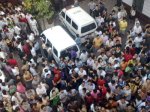
Beijing (AsiaNews / Agencies) – Thousands of protesters besieged a police station in Lianjie, Weiyuan County in Sichuan on August 3rd. Authorities attempted to prevent the news from leaking out, but some locals posted the story along with photos on the internet, and news of the episode has spread quickly.
There is little official information and the police have refused to comment. From information on the Internet, it appears that at 3 o’clock in the afternoon a mob blocked the main street and surrounded the police station in protest because two citizens had been beaten for no reason: a woman was beaten to death by a municipal officials because he had parked her motorcycle in front of a shop, a man was beaten by police over a dispute with the hospital.
The crowd has held the barracks under siege for hours, throwing rocks and bricks and overturning police cars.
In the China of the economic miracle protests are frequent (over 87 thousand in 2008) against abuse of all kinds, by people who otherwise can not get justice. Often, events result in violent clashes with police, sent by the authorities to quash the protests. The exasperation is high and each new incident can trigger a public outcry.
On July 5th, thousands of residents in Gangkou (Jianxi) attacked the town hall and clashed with hundreds of policemen. The people protested because 300 police in riot gear had blocked the exits to the city to prevent them from going to present a petition of protest to higher authorities: those who tried to circumvent the blockade were beaten.
In June 2009 there were days of urban warfare in Shishou, Hubei, when over 50 thousand residents took to the streets protesting the death of a young man in a hotel frequented by public officials: the police talked of suicide but the family has denounced personal responsibilities.
The protests are a result of peoples inability to get justice: such as in many cities poisoned by industrial waste, where the authorities do not control the factories’ activities.
China protesters clash with police over ‘beatings’
afp
2010-08-05
BEIJING, Thursday 5 August 2010 (AFP) – Dozens of people clashed with police in southwest China this week over alleged police beatings, drawing at least 1,000 people into the street as the melee unfolded, a resident and state media said.
The riot was triggered Tuesday when police in Sichuan province’s Weiyuan county tried to take away a badly parked motorcycle and allegedly beat the owners when they resisted, a resident living near the scene told AFP.
« Dozens of people were fighting with the policemen, more than 10 people were injured and more than 10,000 people came to watch, » said the man, who refused to be named, adding the unrest lasted 13 hours.
A spokeswoman for the Weiyuan government, who also refused to be named, confirmed Thursday that the riot had taken place but would not give further details.
The state China News Service reported that the unrest was triggered by the motorcycle incident, although there was no mention of a police beating. It put the number of people at the scene at more than 1,000.
The violence escalated when a coal miner — angered by a nearby hospital’s refusal to give him sleeping pills — passed by and shouted that police were beating people up, the report said.
« The surrounding crowd beat up the police and turned over law enforcement vehicles. The four policemen ran into the police station, the crowd followed them… and smashed the station’s glass door, » it added.
The resident confirmed that the protesters threw stones and bottles at the police station.
China sees tens of thousands of protests or outbursts of violence every year, often sparked by grievances over issues such as forced evictions or police brutality.
The government views this unrest with concern as it is seen as a threat to the nation’s stability.
Heurts dans le sud-ouest de la Chine
AFP
05/08/2010
Des affrontements ont mis aux prises pendant des heures en début de semaine des dizaines de personnes et des policiers dans le sud-ouest de la Chine, ont annoncé des médias officiels et un résident.
Les troubles ont été déclenchés mardi alors que la police du district de Weiyuan, dans la province du Sichuan, tentait d’embarquer une moto mal garée et s’est mise à battre son propriétaire, a expliqué un habitant contacté par l’AFP.
Puis « des dizaines de personnes se sont battues avec les policiers, plus de 10 ont été blessées et plus de 10.000 sont venus voir », a dit ce témoin requérant l’anonymat, ajoutant que les heurts avaient duré 13 heures. Un porte-parole du district de Weiyuan a confirmé des affrontements, mais a refusé de donner des précisions.
L’agence semi-officielle Nouvelles de Chine a expliqué de son côté que les troubles avaient été déclenchés par l’incident concernant la moto, sans faire mention de violences policières, et a estimé le nombre de badauds à un millier. La violence s’est acrue lorsqu’un passant s’est mis à crier que la police frappait des gens, selon l’agence.
« La foule s’est mise à brutaliser les policiers et à renverser les véhicules du services d’ordre. Les quatre policiers se sont réfugiés au commissariat, et la foule les a suivis (….) brisant les portes en verre. L’habitant a confirmé que les protestataires avaient jeté des pierres et des bouteilles sur le commissariat.
Chaque année, la Chine voit des dizaines de milliers d’explosions de violence, souvent déclenchées par des interventions musclées de la police ou des évictions forcées. Le gouvernement ne cache pas sa préoccupation devant ces innombrables « incidents de masse » qui menacent la stabilité du pays.
Informations
Le xian de Weiyuan (威远县 ; pinyin : Wēiyuǎn Xiàn) est un district administratif de la province du Sichuan en Chine. Il est placé sous la juridiction de la ville-préfecture de Neijiang.








 anthropologie du présent