
Emeutes de l’électricité en Iraq – juin 2010
Dark days for Iraq as power crisis bites
atimes.com
26 06 2010
By Charles McDermid and Khalid Waleed
BAGHDAD – Sameh Mohammad is pretty much your typical Baghdad housewife. She’s tough, world-weary and consumed by the daily challenge of keeping her four children fed, clothed and alive in the rough Shaab district of the capital’s eastern slums. She eased down on her doorstep amid the searing afternoon heat on June 22, and issued a typical Baghdad complaint:
« How can an oil-rich country like Iraq not provide electricity for its people? Our oil is enough to build cities and countries, how is it that government can’t give us more than one or two hours of power each day? It’s been like this for years, » said Mohammad.
Other frustrated Iraqis are taking this question to the streets. Demonstrations and riots over electricity shortages have erupted across the country in recent days with many using the power cuts as a shocking symbol of a corrupt and inefficient government.
Temperatures soaring above 50 degrees Celsius, recent power and fuel price hikes, a dithering government still unable to cobble together a ruling coalition now more than three months after the national election – these factors along with Iraq’s simmering social problems have made for a perfect storm of protest that may have just begun.
Iraq rarely speaks with one voice, but the everyday impact of the electricity crisis has crossed wide sectarian and social divisions. That thousands would risk violence and bombings to gather in large groups speaks volumes about the anger on the street. Local media have reported that several leading Shi’ite clerics have called on followers to protest.
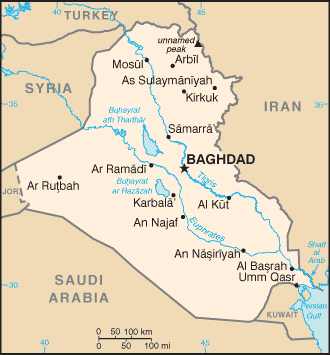
Last week in Basra in the south, two demonstrators were killed when police opened fire on a mob enraged by power cuts that reduced electricity availability to below two hours per day. Seventeen police were wounded in Nasiriyah on June 23 by a rock-throwing mob that was trying to storm a provincial headquarters and had to be beaten back by water cannons.
Protesters in Hilla and Diyala on Thursday besieged government buildings and called for the resignation of caretaker Prime Minister Nuri al-Maliki. Demonstrations in Baghdad’s poorer and hardest-hit neighborhoods have become a daily occurrence, prompting Baghdad Operations Command to issue strict riot-suppression measures.
The electricity crisis now poses a grave threat to Maliki’s contested bid for a second term and promises that any incoming government will be met with rage. Embattled Minister of Electricity Karim Waheed, who reportedly once threatened those who sabotaged power stations with the death penalty, has resigned.
Waheed was quoted in the media as saying that to meet domestic requirements for power, Iraq should be able to produce at least 14,000 megawatts, but the grid’s capacity is about 8,000 megawatts.
Ibrahim al-Sumaidaei, a Baghdad lawyer and newspaper columnist, wrote, « These demonstrations are a spontaneous reaction to the continuous failure and fake promises of more than one government and dozens of corrupt ministers and officials. For years they have been lying to the Iraqi people, telling them the electricity will be fixed this month, or next month. They always say soon, but it never happens. »
The timing of the protests is a nightmare for Maliki, whose re-election campaign was built around purportedly improved security and services since he emerged as a surprise prime minister in 2005. His Shi’ite majority State of Law alliance took populist platforms into rural areas and Baghdad’s impoverished neighborhoods and ended up second in the March 7 parliamentary vote.
Maliki regained frontrunner status by merging with another Shi’ite bloc, but has drawn subsequent criticism for failing to negotiate a coalition government with Sunnis and Kurds and his demand to return as prime minister has been an obstacle. Although this week he agreed to curb the powers of his post to stay in office, analysts say it could be several more months before a government is formed.
Now he faces a public and a parliament that are increasingly wondering how the country’s electricity sector seems to have gotten worse in the past five years. Maliki and his team have called for calm, but patience is running out. Should he gain a nomination for the premiership, he’ll be facing a vote by parliamentarians whose constituents may be sitting in the dark.
« The fact that we still have so little electricity after all these years makes people think the government has done nothing for them. Maliki was counting on his security achievements to guarantee him the prime minister position again, but these demonstrations are a message that security alone is not enough. You have to deal with the needs of the people, » said Sumaidaei.
Iraq’s power problems are nothing new. Under former dictator Saddam Hussein, sanctions and wars held electricity access in most of the country down to four to eight hours per day. During the United States-led invasion of 2003, power plants were prime targets for air strikes. Since then, the US has babysat the rehabilitation of Iraq’s electricity sector to the tune of US$4.6 billion, or 40% of Washington’s total spending on reconstruction.
Even so, sectarian violence in the invasion’s aftermath took a heavy toll on rebuilding efforts. As regional energy analyst Samuel Ciszuk told the Associated Press: « Everything that was thrown at the problem between 2003 and early 2007 was wasted money because whatever was built was blown up. »
The government claims most Iraqis have around six hours of electricity per day, but in Baghdad’s poorer neighborhoods that time is slashed to one or two hours. On top of the rationing and rolling blackouts, the government doubled electricity fees on June 1 to roughly $100 per month. Demand has spawned a black market for electricity in which private-run generators provide power to the highest bidder. The increase in gas-hungry generators has led to a spike in fuel prices from from 20 Iraqi dinar per liter in 2003 ($0.0054 at 2003 exchange rates), to 450 dinar ($0.38) today.
Businesses and hospitals are demanding help from the government to stay open, and more and more Iraqis are denouncing the last administration and its alleged misuse of time and petrodollars.
« We get electricity for only two hours each day – one in the day and one in the night. And for this the invoice last month was 200,000 Iraqi dinar, » said Um Abdullah, 49, a housewife in central Baghdad’s Bab al-Moadham district.
« It’s the government’s big joke on us: We pay a lot of money for no electricity. It would be better to just eliminate the electricity service, » she added.
The government claims improvements are in the works, but stalled due to dips in oil prices and the international financial crisis. Officials point to a roughly $3.5 billion annual budget for electricity and recent contracts signed with heavyweight energy firms General Electric and Siemens AG build power plants and boost infrastructure. (Still, even the government admits there is no quick fix.)
Meanwhile, the US is using the current problem as extra leverage to push Iraq’s leaders to form the next government before the withdrawal of American combat forces in August. To « get on with it », in the words of US ambassador Christopher Hill.
« We understand the frustrations of Iraqi citizens languishing through a very hot summer with limited supplies of electricity. At the same time, overall electricity production is more than 50% higher than it was prior to 2003. The problem is that demand has doubled, outstripping even increased supply, » said US Embassy spokesman Phil Frayne.
Frayne continued: « The dissatisfaction of some citizens with the intermittent supply of electricity points up the need to form a new government quickly so that the government can focus all its attention on providing essential services to the Iraqi people. »
The statement could be read as a direct message to Maliki as he enters a period that will decide his political future. With the public unified in frustration, and the world watching the clock as a new government fails to form, Maliki must proceed carefully to avoid having his own political power cut off.

Iraq: Electricity shortages fuel riots and demonstrations
globalarabnetwork.com
Friday, 25 June 2010
The interim Iraqi government is reeling from riots and demonstrations that have erupted across the country to protest severe electricity shortages.
Anger has been growing for weeks over the continued power cuts and rising fuel prices – resulting from the demand for generators – and the stalled efforts to form a new government.
At least two demonstrators were killed June 19 in the southern city of Basra when security forces opened fire on a mob enraged after electricity was reduced to less than two hours per day.
Seventeen police were wounded in Nasiriyah on June 22 when hundreds of protesters clashed with riot troops outside provincial administrative offices. Protests have become an almost daily occurrence in some poor neighborhoods of Baghdad.
The crisis saw its first political casualty on June 23 when the embattled electricity minister, Karim Waheed, handed in his resignation to caretaker prime minister Nuri al-Maliki, whose own bid for a second term has now been cast in doubt.
“The fact that we still have so little electricity after all these years makes people think the government has done nothing for them. Maliki was counting on his security achievements to guarantee him the prime minister position again, but these demonstrations are a message the security alone is not enough. You have to deal with the needs of the people,” Ibrahim al-Sumaidaei, a lawyer and political analyst in Baghdad, said.
The crisis comes as Maliki and other leaders try to cobble together a coalition government, more than three months after an inconclusive national vote. As public anger intensifies, Maliki and his team have called for calm and patience.
“Neither the ministry of electricity nor the government has done anything wrong; both are doing their job. All that happened is a delay in our plans to boost electricity due to lack of money because of the international financial crisis which has hit the whole world, not just Iraq,” Thamir al-Gadhban, head of -Maliki’s cabinet and the prime minister’s oil adviser, said.
Another Maliki adviser, Ali al-Mosawi, said the government has taken unprecedented measures to alleviate the blackouts that have reduced power in some parts of Baghdad to about an hour each day. Millions of Iraqis are forced to live with less than six hours per day, according to government estimates, and most cannot afford to purchase or operate a fuel-burning generator.
“The government is doing its best to provide as much power as it can for Iraqi citizens. We are now cutting off electricity to all officials’ homes and government institutions in the Green Zone (the heavily protected government compound in Baghdad) so that power will go instead to the Iraqi people,” Mosawi said.
“Looking to the future, the government is going to complete the electricity generating and infrastructure projects that have already been started. These projects will save the country from this problem, but it cannot be solved in a month or two months or probably not even a year. Such projects take time.”
The government said it spends roughly 3.5 billion US dollars on electricity generating and infrastructure projects each year. Deals to build power plants and improve Iraq’s faulty electricity grids have been signed with international corporations General Electric and Siemens, but the results are years away.
Figures released by the US embassy show demand for electricity at an all-time high. Officials and experts say there is no quick way to meet the increased demand.
“The ministry needs five billion dollars per year, and we get around 1 to 1.2 billion. According to our plans, electricity was meant to be provided to Iraqi citizens at a rate of 12 hours per day in 2010, and 24 hours per day in 2011. But the lack of money has changed all our plans; we could not build new power plants or fix the old ones. To improve the electricity situation, we need to increase the budget,” Deputy Minister of Electricity Raad al-Hares told IWPR.
As the electricity crisis unites Iraqis across sectarian and social divisions, politicians who campaigned on promises of improved services have been left scrambling to appease the public.
“Most of the candidates in the parliamentary vote diagnosed correctly that the electricity shortage is the main problem in Iraq. All political parties and blocs said the problem needed a radical solution. They ran their campaigns around offering to solve it, but nobody ever detailed how they were going to do it,” Khalid al-Asadi, a senior member of the State of Law alliance, said.
The government has also come under fire for hiking electricity rates on June 1. According to Adnan Rehayma, a member of the Union of Electrical Professions, the cost for an average household has doubled.
The US government, which has invested 4.6 billion dollars in rebuilding Iraq’s electricity sector, claims electricity production is up 50 per cent from 2003, but still can’t keep pace with demand. The US has said the energy crisis has reinforced the need for political stability.
“The dissatisfaction of some citizens with the intermittent supply of electricity points up the need to form a new government quickly so that [it] can focus all its attention on providing essential services to the Iraqi people,” US embassy spokesman Phil Frayne said.
Meanwhile, ordinary Iraqis are losing patience with the authorities.
In the Bab al-Moadham district of central Baghdad housewife Um Abdullah, 49, tries to raise her family on two hours of electricity per day.
“I’ve heard all the promises from the government about giving us electricity. They’ve been saying all this for years. This government should just give up and admit they can’t provide us what we need to live,” Abdullah said.
Iraq power failures trigger fatal riots
telegraph.co.uk
Days of power failures in Iraq have triggered fatal riots in the south of the country prompting the electricity minister to resign.
Richard Spencer, Middle East Correspondent
23 Jun 2010
An Iraqi electrician checks fuses at a generator which runs when the national power grid is down in Baghdad’s Karrada district Photo: EPA
Karim Waheed, offered his resignation after protests rose to a head in Basra, Iraq’s second city at the head of the Gulf.
Security forces opened fire and killed two people after the crowd, which was demonstrating against repeated power cuts that have reduced electricity supply there to less than two hours a day, began to get out of hand.
The prime minister, Nouri al-Maliki, who is already grappling with a constitutional crisis having failed to form a new government more than three months after an indecisive general election, announced he would accept the resignation.
The whole Gulf region has undergone an early heatwave, with temperatures in northern parts such as southern Iraq, Saudi Arabia and Kuwait hitting 126 degrees Fahrenheit. In Kuwait, one of the most energy rich nations in the world, parliament has recommended government offices close at 12 to save electricity used in air conditioning.
Even in Saudi Arabia, power stations have broken down at times of peak demand in the past week.
In Iraq, where years of sanctions, inadequate economic policies, war and insurgency have degraded the power infrastructure, matters are even worse.
Energy rationing was necessary in the time of Saddam Hussein, but big cities such as Baghdad were given priority.
Now all suffer equally. Basra is among the worst hit, with power availability falling to below two hours a day in the high temperatures.
Anger is increasingly directed at the government, rated as one of the most corrupt in the world, with many ordinary Iraqis accusing ministers of wasting money or creaming off the slowly recovering income from oil exports instead of investing in new supply.
Mr Maliki is promising this will change, though slowly, if he returns to office – he is currently a caretaker prime minister while the main political parties try to put together a working coalition.
« You should not expect to solve the power crisis soon, » he said at a press conference on Tuesday. « It will take two years at least. We will give priority to the electricity sector in the next government. »
The American embassy issued a statement saying that 40 per cent of all its reconstruction budget, or $4.6 billion (£3 billion) had been spent on power infrastructure. Siemens and GE are currently building new power stations.
But pylons and other transmission systems have been a particular target of insurgent bombers in the last seven years.
Mr Maliki’s decision came despite his being seen as close to Mr Waheed, and he denied that he had asked for the resignation.
« I don’t know anyone in Iraq who is more capable than he is at the technical level, » he said. « He was dealing with terrorism day after day. »
Clashes break out in southern Iraq over power shortage, 17 wounded
peopledaily.com.cn
June 21,
Hundreds of angry Iraqis clashed on Monday with Iraqi riot police in Iraq’s southern city of Nasiriya over the shortage of electricity, wounding 17 policemen just two days after a similar protest in Basra that caused the killings of two protectors.
The riot started in the morning in the capital of Dhi Qar province, where dozens of protesters hurled stones at the riot police who were surrounding the building of the provincial council to prevent the protestors from breaching the local government offices, a provincial police source told Xinhua on condition of anonymity.
« The latest reports said that 17 policemen were wounded in the clashes, some of whom are in critical conditions, » the source said.
The riot police turned on water cannons, fired shots in the air and used tear gas against the angry protesters to disperse them, the source said without giving more details about the casualties among civilians in the turmoil of Nasiriyah, some 375 km south of Baghdad.
The protesters lifted banners condemning the provincial governments for not keeping their promises to the Iraqi people over providing electricity and other basic services.
« Where are the promises? We demand resignation of the provincial council and the governor, » one banner said.
On Saturday, a similar demonstration took to the streets in the city of Basra, some 550 km south of Baghdad, to protest against the acute shortage of electricity in which two protesters were killed and three others injured.
The demonstrators in both cities chanted slogans criticizing the central and local governments for failing to stop the continuing power cut in the hot summer of Iraq during which it exceeds 50 degrees Celsius sometimes.
Observers in Iraq always warned that the failure of Iraq’s politicians to form a new government more than three months after the March 7 parliamentary elections could intensify frustration among Iraqis which might be seen as an opportunity for some insurgent groups to increase violence in the war-torn country.








 anthropologie du présent