
Emeute universitaire à Nsukka au Nigeria – février 2010

The riot at UNN
Sun News Publishing
Sunday, February 7, 2010
The ugly spectre of violent students unrest recently reared its head at the Nsukka campus of the University of Nigeria (UNN) where rampaging students vandalized ten newly acquired cars and security equipment, and also destroyed part of the official residence of the Vice Chancellor, Professor Bartholomew Okolo. The riot, which broke out over claims that the university authorities had increased fees, disrupted social and commercial activities in the town, leading to a closure of the campus.
Increases in school fees have always been a cause of students unrest in the country. But the situation at the UNN indicates a total breakdown in communication between the students and the university.
The students insist that fees have been increased by about 300 per cent and they have started paying the new rates, while the university consistently said there was no such increase.
A press release by the university’s Acting Registrar, Anthony I. Okonta, last week, said the riot was orchestrated by disgruntled elements in the university to create a false picture of disharmony and unrest in the institution. Other reports say the Vice Chancellor attributes the riots to people who are opposed to his appointment. The students also claim that the Vice Chancellor refused all attempts to meet with him to discuss the increase.
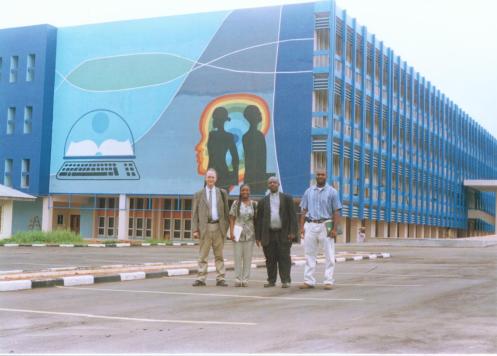
One glaring fact that has emerged from the riot is that the cordial relationship that should exist between the university authorities and the students, who constitute the institutions most critical stakeholder group, is non-existent. This accounts for the ability of an allegation which the university claims to be false, to fester, and snowball into a riot with attendant losses to the university.
Students have a right to protest perceived injustices against them. The increasing commercialization of university education in many parts of the country, at this time of economic meltdown, cannot but attract indignation and protests from students. Nigerian students have a right to expect and receive a good education at an affordable fee.
However, the resort to willful destruction of university property by students during the protest is condemnable. They ought to have tempered their reaction and embraced dialogue to achieve their desired result. Wanton destruction of university property does not do anyone any good, especially with the parlous state of the economy. The cost of repair and replacement of destroyed items is an avoidable wastage
The university authorities should rev up the governance process in the institution to address the communication breakdown that caused the riot. The Vice Chancellor and the university administration should carry the students union government along on all decisions. They should be bold enough to disclose plans for any increases in school fees to students, and give a reasonable notice for the fees. Increase in school fees is not something that can be done surreptitiously.
Again, the university statement referred to the protesting students as rioters. This is in very bad taste. The riot has created the impression that the Vice Chancellor is unpopular, and was probably imposed on the university community. Reports in newspapers suggest a lack of confidence in his leadership. The sincerity of his claim that there had never been any plan to increase fees has been questioned. Certainly, the university should have promptly taken steps to convince the students that there was no plan to increase fees before the riot broke out, if, indeed, there was none. Nevertheless, protests are a healthy university culture but they should never be destructive.
They should be for noble ideals, and go beyond issues such as food in the canteens, state of the hostels and school fees, to critical issues affecting the economy and the nation. Such protests should never be violent, but used as a way to air their grievances to constituted authorities. Dialogue tempered with patience, should be the preferred option for resolving disagreements with university authorities. The university should improve its communication dynamics to ensure that violent protests do not become an attractive option to students.
The loss of academic time and property in this riot is regrettable. It is not good for the education system and everything should be done to avoid such.
The issue that led to the riot should be addressed squarely and objectively by the university authorities. There should be no chasing of shadows or a resort to primordial sentiments to explain the rift. Everything that is necessary should be done by the institution to restore normalcy on campus so that the students can return to their studies.


Informations
Nsukka is a city and Local Government Area in South-East Nigeria in Enugu State. Other towns that share common border with Nsukka, such as Enugu Ezike and Obollo-Afor (formerly centre of the palm oil trade), Ede-Oballa, Uzo Uwani and Mkpologwu, now also claim the name Nsukka, hence they all collectively fall into the political zoning system in Nigeria known as Senatorial Zone. As of 2007 Nsukka Senatorial Zone had an estimated population of 117,086. [1] Nsukka Town is presently known mostly as the site of the University of Nigeria the first indigenous Nigerian University, founded by Dr. Nnamdi Azikiwe, the first ceremonial President of Nigeria. Currently the town has a number of Federal Parastatals in the University such as NABDA, CBSS, and the Energy Research Centre. Slogan: The Pivotal Pillar






 anthropologie du présent