
Affrontements en Turquie – novembre 2009
Unrest at Kurdish demonstration leaves 11 injured

Monday, November 23, 2009
Eleven people, including four policemen, were injured Sunday when clashes broke out at a Kurdish rally in western Turkey, forcing police to fire warning shots in the air, Anatolia news agency reported.
Supporters of the pro-Kurdish Democratic Society Party, or DTP, were attacked by enraged residents in İzmir after they displayed flags of the outlawed Kurdistan Workers’ Party, or PKK, while riding in a crowded convoy in the city, the report said.
One person, hit in the head with a stone, was hospitalized, while the others had only light injuries, İzmir Gov. Cahit Kıraç told Anatolia.
Tensions flared when a vehicle from the DTP convoy hit a bystander, prompting the authorities to bring in riot police.
The security forces fired warning shots in the air after a crowd assembled and began stoning the convoy, Anatolia said.
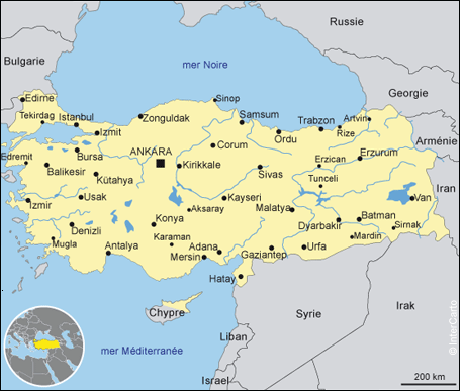
The Aegean port of İzmir is home to a large migrant community from the mainly Kurdish Southeast, where the PKK has waged a bloody campaign for self-rule since 1984.
Ankara has promised the Kurds fresh reforms to expand their freedoms in a bid to erode popular support for the insurgency.
But the initiative sparked tensions last month when eight PKK members, who came from bases in neighboring Iraq and surrendered to the authorities in a gesture of goodwill, were allowed to go free.
The judiciary’s unusually lenient treatment and the hero’s welcome the PKK members received in the Southeast unleashed demonstrations across Turkey.
Unrest at Kurdish rally leaves 11 injured in Turkey

Tuesday, 24 November 2009
Ankara has promised the Kurds fresh reforms to expand their freedoms.
Eleven people, including four policemen, were injured Sunday when clashes broke out at a Kurdish rally in western Turkey, forcing police to fire warning shots in the air, Anatolia news agency reported.
Supporters of the Kurdish Democratic Society Party (DTP) were attacked by enraged residents in Izmir after they displayed flags of separatist Kurdish rebels while riding in a crowded convoy in the city, the report said.
One person, hit in the head with a stone, was hospitalised, while the others had only light injuries, Izmir Governor Cahit Kirac told Anatolia.
Tensions flared when a vehicle from the DTP convoy hit a bystander, prompting the authorities to bring in riot police.
The security forces fired warning shots in the air after a crowd assembled and began stoning the convoy, Anatolia said.
The Aegean port of Izmir is home to a large migrant community from the mainly Kurdish southeast, where the outlawed Turkey’s Kurdistan Workers’ Party (PKK) has waged a bloody campaign for self-rule since 1984.
Ankara has promised the Kurds fresh reforms to expand their freedoms in a bid to erode popular support for the insurgency.
But the initiative sparked tensions last month when eight PKK militants, who came from rare bases in neighbouring Iraq and surrenderred to the authorities in a gesture of good will, were allowed to go free.
The judiciary’s unusually lenient treatment of the rebels and the hero’s welcome they received in the southeast unleashed demonstrations across Turkey.
Since 1984 the PKK took up arms for self-rule in the mainly Kurdish southeast of Turkey (Turkey-Kurdistan) which has claimed around 45,000 lives of Turkish soldiers and Kurdish PKK guerrillas. A large Turkey’s Kurdish community openly sympathise with the Kurdish PKK rebels. Turkey refuses to recognize its Kurdish population as a distinct minority.
The PKK has long called on Ankara to halt military operations and agree to negotiations for a solution, which it says should include official recognition of the country’s Kurds in the constitution.
The PKK demanded Turkey’s recognition of the Kurds’ identity in its constitution and of their language as a native language along with Turkish in the country’s Kurdish areas, the party also demanded an end to ethnic discrimination in Turkish laws and constitution against Kurds, ranting them full political freedoms.
The government categorically rejects dialogue with a group it labels a terrorist organization and says it will not let up on the military campaign against the rebels. The PKK is considered a ‘terrorist’ organization by Ankara, U.S., the PKK continues to be on the blacklist list in EU despite court ruling which overturned a decision to place the Kurdish rebel group PKK and its political wing on the European Union’s terror list.
Turkey refuses to recognize its Kurdish population as a distinct minority. It has allowed some cultural rights such as limited broadcasts in the Kurdish language and private Kurdish language courses with the prodding of the European Union, but Kurdish politicians say the measures fall short of their expectations.
The European Union, which Turkey wants to join, has praised Erdogan’s efforts to end the conflict. His so-called democratic initiative aims to expand cultural and political liberties to address decades of grievances from Kurds who say they have faced state-sanctioned discrimination and violence.
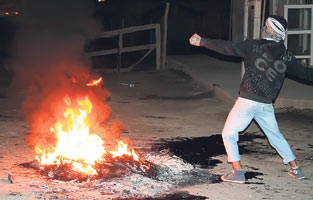
The İzmir stones
Tuesday, November 24, 2009
YUSUF KANLI
İzmir has always been one of the most progressive cities in Turkey, the bastion of the Turkish left and a political stronghold of the Republican People’s Party, or CHP, like Ankara’s Çankaya.
Diyarbakır, on the other hand, has been the stronghold of ethnic Kurdish politics.
In the last mayoral elections, Prime Minister Recep Tayyip Erdoğan instructed his Justice and Development Party, or AKP, to work hard and win mayoral seats in İzmir, Çankaya and Diyarbakır. The message he wanted to send was clear: The AKP has won even in the castles of the CHP and the Democratic Society Party, or DTP, the political wing of the separatist Kurdistan Workers’ Party, or PKK.
What appeared to be a planned stoning of the DTP convoy in İzmir last week, aimed at provoking the people to violent opposition to the government’s “Kurdish” opening – which evolved first to a “democracy” opening and later to the “national unity and brotherhood project” – was a very important development. Indeed, it might be considered an “early warning” of the potential difficulties this country might face in the near future.
Unfortunately, the İzmir stoning of the DTP convoy and the veiled threat issued by DTP leader Ahmet Türk that if such incidents continued, “people may take action against other political convoys” in “some other parts” of the country were strong indicators that the so-far mismanaged “national unity and brotherhood project” has the potential to trigger the much-feared “disintegration” along ethnic lines.
Definitely, the stoning of the DTP convoy in İzmir was not a sign of something good. It was a development that should alarm all those in executive positions, as well as the opposition CHP and the Nationalist Movement Party, or MHP. Before it becomes too late, the cockfight at the helms of Turkish politics must be replaced with a dialogue. At the very least, the insulting and antagonistic language in the duel of words between the prime minister and the two opposition leaders must be toned down and taken to a civilized level. Naturally, the main responsibility rests with the prime minister, but no one can say the leadership style of either CHP head Deniz Baykal or the MHP’s Devlet Bahçeli is conducive to the much-needed constructive and responsible statesmen behavior.
Eminent İzmir personality and one-time leading media mogul Dinç Bilgin commented the other day that while trying to oppose the advances of political Islam elsewhere in the country, İzmir has gradually become radical and, indeed, a very conservative society.
No one should forget that in the 2002 elections, Cem Uzan and his Genç Party, or GP, received considerable support from İzmir with a rather fascist political platform. That was attributed at the time to the fact that Uzan’s family was “from the other side of the Aegean” and that İzmir has been a city of “Balkan migrants.”
Violence is not the right way to oppose
Even with that background, it was difficult to understand how in a “democrat” city like İzmir, a political convoy could be stoned and so much hatred pour out of people’s mouths. Though there might be displeasure with and even strong opposition against the way the government has been handling, or mishandling, this “civilian and democratic resolution” of the Kurdish problem and separatist terrorism, Turkey is facing a historic opportunity to bury one set of the worst social problems within its democracy. Opposition to this move by the government should not turn violent because violence in this highly polarized country could land all of us in a dreadful situation, the consequences of which we would not like to spell out now.
The Habur fiasco and the apparent fellowship of the AKP government with the separatist PKK have been very worrisome developments. But to what extent might it be appropriate to retaliate to some very worrisome happenings with even more bothersome and provocative reactions that might trigger a far bigger danger to national unity than the PKK?
Erdoğan has a responsibility to soothe the strong concerns of the nation regarding this “Kurdish opening” and the very serious “Yugoslavia syndrome” in Turkish society, but Baykal and Bahçeli should also sit back and make a recollection before it is too late.
After all, don’t we need a resolution of the Kurdish problem through democracy? Or should we shun civilian initiatives and insist on the military option for another century?
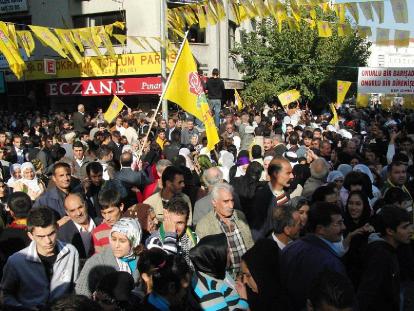
Hakkari citizens protest DTP bashing by İzmir demonstrators

25 11 2009
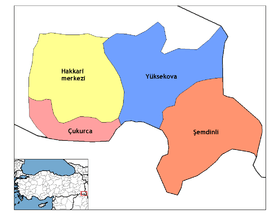
Citizens in the southeastern province of Hakkari have protested against an attack on a convoy carrying Democratic Society Party (DTP) members in the western province of İzmir.In 11 districts in Hakkari, citizens started protests late on Monday night. Police had to intervene, and five protestors were detained. Security has been tightened in the province as a result.
The protest was against what the deputy chairmen of the DTP Selahattin Demirtaş and Gültan Kışanak called the “continuation of organized lynching attempts directed at the DTP and Kurds.” The two officials made the statement on Monday regarding the attack on Sunday in İzmir against a DTP convoy.
Residents stoned the DTP members in İzmir, one of the cities with the highest number of migrants from the Kurdish-dominated cities of the East.
A DTP convoy of 200 vehicles returning to party headquarters from Adnan Menderes Airport, where they greeted DTP leader Ahmet Türk, who had paid a surprise visit, was stoned by a group of people. The attackers, a group of residents holding Turkish flags as well as sticks and stones, blocked the convoy when it reached the Üçyol crossroads and harassed the drivers whom they believed were also Kurdish.
Most Turkish dailies reported the protests in İzmir, showing the photographs of modern, well-dressed women and men holding stones to throw at the convoy.
Prime Minister Recep Tayyip Erdoğan said yesterday before leaving for Libya that such scenes act as a negative influence on the democratic initiative. He was referring to the government’s democratization initiative which involves granting more citizenship rights to the country’s Kurds.
“If there is a terrorist organization’s flag and the posters of the terrorists’ leader in a bus which belongs to a party, this can’t be sanctioned. Our judiciary is doing what is necessary in that regard. Such scenes affect the process negatively,” he said.
Some witnesses in İzmir claimed that the group attacked when vehicles in the DTP convoy unfurled flags of the terrorist Kurdistan Workers’ Party (PKK). However, some have expressed the opinion that the violent protest might have been planned ahead as the attack occurred along a road where the Nationalist Movement Party’s (MHP) İzmir office is located. MHP members and members of the Idealist Hearths, an MHP-affiliated youth group, flocked to the scene. Most of the vehicles’ windows were shattered during the protestor’s attack.
MHP İzmir province head Müsavat Dervişoğlu said after the events that the MHP had acted correctly in the face of such “provocations.” Speaking at the place where the attacks occurred, Dervişoğlu warned ultranationalists.
“The events in İzmir could have been used to ignite a fire. We will not be a tool for that. We will never allow it,” he said.
Prime Minister Erdoğan also said that he had discussed the issue with Interior Minister Beşir Atalay.
“We cannot allow such scenes anywhere. We will intervene. You also realize what the protestors represent, what their signs and symbols say. I don’t have to say it. There is an effort to develop an environment of conflict,” Erdoğan said.
The police had fired into the air in İzmir to disperse the crowd. However, members of the DTP have complained that the police were late in their intervention. They also stated that small-sized gas tanks and other heavy items were tossed from the windows of nearby buildings. The group did not disperse after the convoy passed through, and they blocked traffic singing the national anthem. Meanwhile, residents of nearby buildings hung Turkish flags from their windows, observers noted.
Hürriyet daily columnist Yılmaz Özdil wrote in his column on Tuesday that the protest in İzmir was just a “warning” and that “the worst might be yet to come.”
In response to a reporter’s question, Erdoğan said at the airport that more people from the Makhmour camp in northern Iraq and where most of the PKK members are located will return to Turkey as long as they are not involved in terrorism.
The interior minister had recently stressed that the public will not see “welcome home celebrations” for members of the PKK who surrender to Turkish security forces. Atalay had previously lambasted the pro-Kurdish DTP for organizing such a demonstration and celebration. The return of 34 people — eight from a PKK camp, the others from Makhmour — in late October turned into a show for PKK sympathizers and supporters in Turkey. The government then slammed the DTP for blocking the democratic initiative process.




 anthropologie du présent