
Emeute de Mingong 民工 à Panyu 番禺 dans le Guangdong 廣東- novembre 2009
Infant’s death in hospital leads to violence

By Qiu Quanlin
2009-11-04
GUANGZHOU: Police detained 14 people who allegedly vandalized a hospital after a boy baby died there, local public security authorities said Tuesday.
About 100 family members and friends of the infant’s parents, both migrant workers from neighboring Fujian province, destroyed medical facilities in Shiqiao Hospital in Panyu district after 6-month-old Huang Yuxiang died during treatment.
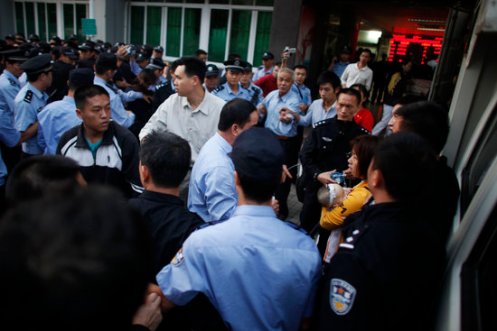
Police in Panyu had to seal off the seventh floor of the hospital, where windows were destroyed, to prevent further disturbance.
« Doctors did not take prompt measures to save the baby, who was on an intravenous transfusion after catching a cold, » said Huang’s aunt.
Huang’s parents and family members asked for « a fair explanation » from the hospital, but they were shown a fake medical report, she said.
« Doctors say it was an unusual death. It was hard for us to control our anger at the time, » she said.
The hospital said the infant’s parents refused to sign the consent form when Huang was in a critical condition. The hospital, however, still did its bit to rescue the boy, it said.
Further investigation is under way, police said.
Guangzhou has seen a rising number of mass disturbances in the past few days, despite the city’s tightened security ahead of next year’s Asian Games.
More than 30 migrant workers from Hunan province attempted suicide by climbing Haizhu bridge downtown on Monday after a local beer company defaulted on their wages.
The would-be jumpers caused a traffic jam for several hours along the bridge, which has been the scene of many threatened suicides in attempts to draw public attention.
In another case in Panyu over the weekend, migrant workers from Guizhou province brawled with local residents after two children bumped against each other.
The children’s mothers – a migrant worker and a Panyu resident – fought with each other and later called their relatives and friends to join, leading to a melee.
The fight, which resulted in eight police cars being destroyed and three officers injured, was quelled only after police detained 26 people, mostly migrant workers.
Local legislators called upon local authorities to « take effective measures » to deal with migrant workers’ requests as « tightening security forces has not proven enough to maintain social order ».
« People always use extreme measures such as protests and attempted suicides after their appeals are not dealt with in a proper manner by the government, » said Zhu Lieyu, a deputy to the Guangdong provincial people’s congress.
Healthcare riot a warning symptom for Beijing

Thursday, November 5, 2009
A SIX-MONTH-old baby boy, from the poor province of Fujian, only had a common cold, but Huang Yuxiang died while on an intravenous drip at Shiqiao Hospital in Panyu, Guangzhou City, in what doctors described as an “unusual death”.
There is growing public discontent about China’s public health system, especially among the country’s legion of 130 million migrant workers who feel they are being treated as second-class citizens in the cities where they move to work.
The Communist Party sees mass protests arising from economic issues such as poor healthcare, corruption, official inaction or simple incompetence as a far greater threat to single-party rule than any pro-democracy or human rights activism.
Some estimates put the number of “mass incidents” or protests in 2008 at over 125,000.
While more than 20 million of these migrant workers lost their jobs during the early months of the economic downturn, many have returned to work in the vast infrastructure programmes begun as part of the government’s four-trillion yuan (€400 billion) fiscal stimulus plan.
In Panyu, about 100 family members and friends of the infant’s parents, all of them migrant workers, demanded more of an explanation and when they didn’t get it, they went on the rampage, smashing windows and destroying medical facilities at the hospital.
Police detained 14 people and had to seal off the seventh floor of the hospital to stop the unrest. The hospital said the infant’s parents refused to sign the consent form when Huang was in a critical condition, while the family still wants an explanation.
Meanwhile, outside the Xiangya Hospital in Hunan province, hundreds of people queue up every night just to get the “passport” you need to see a doctor.
At 5.30pm the gates open, a starter’s whistle is blown and there is bedlam, with people sustaining injuries in the crush for the pass to see the doctors. Touts sell tickets for the queue, and again, many of those seeking help are migrant workers.
The health reform plan unveiled in April this year, which will spend 850 billion yuan (€84.6 billion) on health over three years, envisages a clinic in every village, 2,000 new hospitals and health coverage for 200 million uninsured Chinese.
The plan foresees universal healthcare services available to all of its citizens by 2020, as it seeks to address a system that is threatening to buckle under the demands of 1.3 billion people.
There was huge public anger following a CCTV exposé of Peking University First Hospital, a top hospital, where medical care was being carried out by trainees and malpractice cases were common.
Despite the resilience of the economy, there have been a growing number of public order disturbances. Guangzhou has seen a rising number of mass disturbances, despite the city’s tightened security ahead of next year’s Asian Games.
More than 30 migrant workers from Hunan threatened to commit suicide by jumping from Haizhu bridge in downtown Guangzhou this week after a local beer company defaulted on their wages.
In another case over the weekend, also in Panyu, migrant workers from Guizhou province brawled with local residents after two children bumped into each other. The children’s mothers – a migrant labourer and a Panyu resident – fought with each other and later called their relatives and friends to join, leading to a real punch-up.
Eight police cars were destroyed and three police officers were injured. The violence was quelled only after police detained 26 people, mostly migrant workers.
Lawmakers say tighter security is not working and local authorities need to “take effective measures” to deal with migrant workers’ complaints.
There could be more trouble on the horizon. At least 40,000 migrant workers from the Three Gorges Dam area have either been wrongly registered or unregistered for identification and therefore have no access to compensation payments, a senior official in Chongqing told local media.
男婴输液后死亡 百余亲属打砸医院(组图)

2009年11月04日
昨日(2009年11月2日)上午,一名只有六个月大的婴儿在番禺市桥医院输液后死亡。家属以婴儿非正常死亡为由,召集近百名亲属及老乡围堵医院要求作出解释,并一度打砸病房。直到昨日下午6时,警方出动数十特勤、辅警,从现场带走14名人才暂时平息事件。
现场:十余病房被砸
昨日中午12时左右,数十名福建籍人冲进番禺市桥医院,要求院方就一名六个月大男婴在该院打针后死亡作出合理解释。
目击者称,前来讨说法的,从20人左右渐渐增加至60多人,都是三四十岁的青壮年,“进医院后就把大门堵住,不让人进出”。
在院方没有及时回应的情况下,死亡男婴家属及老乡冲进七楼病房,拿起凳子等就开始打砸玻璃与医疗器械。“动作快,很粗暴。”目击者称,当时医生还在抢救那男婴,其它病房有十多名病人。
番禺警方称,他们12时许接到报案,称有人在医院闹事,赶到现场时,七楼病房已经散落了一地的玻璃,十多间病房的门窗被砸坏,一些医疗器械扔得到处都是,有人仍试图继续打砸。
昨日下午,一名老者抱着一名死亡男婴坐在医院门口,中间是一大群自称是福建籍的老乡,男婴的亲属不断向人介绍事情经过;医院门口两侧站满了身着制服的公安特勤和辅警。
在七楼病房,现场仍未清理,病房里的其他病人已被转移走。
死亡男婴的姑姑说,如不是警察和医院工作人员阻拦,他们还要继续打砸。
昨日下午5时许,警方强行将男婴尸体拉走,现场家属情绪激动,几次与维护秩序的警察发生冲突。
昨晚警方通报称,当场将14名参与滋事的人员带离现场审查。
家属:男婴被医死
据家属黄小姐介绍,死亡男婴叫黄宇翔,刚刚六个月大。前晚11时许,黄宇翔因患感冒,父母将其送至市桥医院治疗,并办理了住院手续。
前晚12时许,婴儿开始输液,直到昨天早上6时结束,一直安然无恙。上午8时许,男婴病情恶化,开始吐血,但主治医生没有到场处理,只有几个护士在“乱按”。
家属表示,如果小孩有其他问题,医院应该及时告知家属,以便转院或想办法,但医院没有尽到责任,直到上午10时许,对方才告诉家属婴儿抢救无效死了。家属称,事后医院在面对家属的质疑时,曾拿出一本假病历,家属觉得难以接受遂叫老乡来帮忙讨说法。
昨日中午开始,死亡男婴一直被其叔公抱着坐在医院门口,不让人将尸体运走,而小孩的母亲在现场几度哭得昏了过去。
医院:已尽力抢救
番禺市桥医院方面介绍,患者黄宇翔于11月2日凌晨1时许以“支气管肺炎”入院治疗,入院后给予抗感染及相关对应治疗,于次日上午8时30分许 患者出现气促、咯血等症状,当班医生、主任、管床医生以及值班护士均到场参加抢救,护士长汇报给医务科及院领导,并同时联系上级医院(何贤医院、区中心医 院)协助,向患者家属交待患者病情较严重,危及生命。
医院表示,期间家属一直拒绝签字抢救,抢救治疗至9时30分许,何贤医院儿童危重急救中心专家赶到指挥并参与抢救,多次向患者家属交待病情,但 患者家属拒绝交流。11时许,区中心医院专家赶到协助治疗,至11时40分许,专家建议宣告患儿临床死亡,此后患儿家属及其众多亲友开始激动……
南方都市报钟锐钧
进入图酷首页观看更多精彩图片
Informations
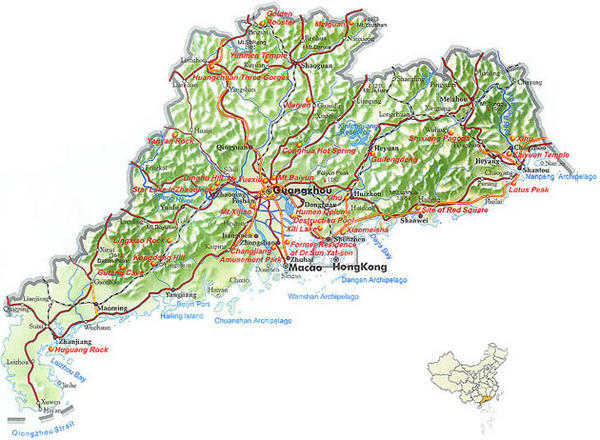
Le district de Panyu (番禺区 ; pinyin : Pānyú Qū), se trouve dans le sud de la ville de Guangzhou 廣州 (Canton).
Míngōng, terme chinois dont la traduction exacte est « ouvrier (gōng) – paysan (mín) », désigne les paysans émigrés souvent considérés comme des « intouchables » et leurs conditions de vie sont très dures du fait des inégalités sociales et de la discrimination dont ils sont victimes dans la société chinoise contemporaine. Depuis la politique de réforme et ouverture (改革开放 « gaige kaifang ») lancée par Deng Xiao Ping en 1978, la Chine s’est ouverte à l’économie extérieure capitaliste. Cette ouverture à conduit à l’élaboration de Zone Economique Spéciales (ZES) qui représentent le dynamisme économique chinois, et dont l’influence se ressent sur toutes les grandes villes des régions littorales. Le dynamisme économique de ces grandes villes attire entre autres les populations paysannes (les 农民) qui viennent y chercher une amélioration de leur condition de vie. Ces populations paysannes sont nombreuses et le recensement dans les contrées les plus profondes de la Chine ne peut être toujours efficace, d’où l’existence d’un certain nombre d’inconnus qui viennent grossir les rangs des migrants (ou flottants : 农民工人 ou plus simplement 民工, litt. « nong min » = paysans, « gong ren » = ouvrier). Leur nombre exacte n’est donc pas connu mais on estime à environ 200 millions la population de 民工, ce qui est colossal. Les 民工 arrivent donc en ville avec l’espoir de trouver un nouveau travail et de pouvoir habiter un immeuble moderne dont les conditions de salubrité, bien que modestes, sont bien supérieures à celles des campagnes, mais la plupart habitent dans des bidons villes et ont beaucoup de mal à avoir un emplois stable. Les 民工 sont beaucoup employés dans la construction d’infrastructures et d’habitations qui, du fait du développement économiques que connaissent les villes littorales, ne cessent de se multiplier. Les 民工 ont d’ailleurs été largement employés dans la constructions des infrastructures liés à l’organisation par la Chine des Jeux Olympiques d’été en 2008. Malheureusement, le nombre croissant de 民工 entraine pour ces derniers des conditions de travail déplorables qui aboutissent à une exploitation salariale sans contrat de travail, d’où le terme de flottants : en effet n’ayant plus de travail ils doivent le plus souvent partir, soit pour retourner dans les terres centrales, soit pour trouver un nouveau travail dans une nouvelle ville. De ce fait ils n’ont jamais le temps de construire quelque forme que ce soit de carrière professionnelle ni même de foyer où ils pourraient séjourner à long terme. Le problème des 民工 est peu pris en charge par le gouvernement qui voit encore les avantages d’une main d’œuvre à bas coût, mobile, dans le développement économique de la Chine, plus exactement de la Chine littorale (et Sichuan 四川)








 anthropologie du présent