
Blocage à Luoche 漯河封锁 dans le Henan河南 avril 2009
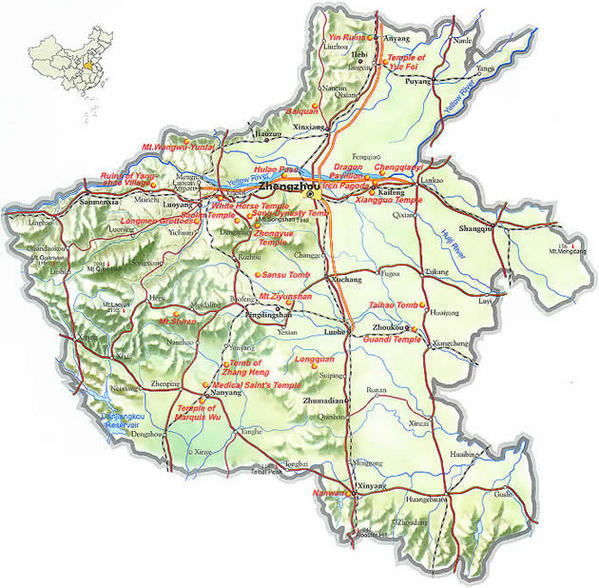

漯河封锁
Muslims Riot In China’s Henan Province

Source: scmp.com, China, April 6, 2009
Hundreds of ethnic Hui Muslim people in the village of Luohe in China’s Henan province have attacked the government headquarters and paralyzed traffic in a protest against the local authorities, according to a Chinese newspaper.
One report said the protests followed the alleged mishandling of an accident in which a Hui villager was injured. Another report noted that the protest erupted after a newspaper report referred to a villager as the “king of pig-raising.”
Conflicts involving the Han and minorities, including the Hui, Uygurs and Tibetans, are highly sensitive in China. According to the report, a villager added: “One should bear in mind that we Muslims would never raise pigs.”
This was the second riot involving Hui people in China this year.
In February, several hundred Hui Muslims clashed with Han Chinese in the Mengcun Hui Muslim Autonomous County, in Hebei province.
Traffic resumes after days of blockade in N China city

2009-04-03
Traffic has resumed in Luohe, Henan province, after it was blocked by protesters since Tuesday over a road accident, a local press official said yesterday.
Hundreds of protesters used tractors and other vehicles to block bridges in Luohe and were only allowing foot traffic to pass over the past several days, according to local residents.
The protesters have been demanding the arrest of a bus driver who ran over a youth last month, along with payment of 1 million yuan ($146,000), far more than the local government has offered.
Chinese Muslims block traffic in protest
2 Apr 2009, AP
BEIJING: Members of China‘s Hui Muslim minority blocked traffic in a central city on Thursday to protest a recent road accident and claims of religious discrimination, reports said.
Hundreds of Hui protesters used tractors and other vehicles to block bridges in Luohe in Henan province since Tuesday and were only allowing foot traffic to pass, according to local residents and a human rights group.
Hui protesters block roads in China after bus death
monstersandcritics.com
Asia-Pacific News
Apr 2, 2009,
Beijing – Protestors from China‘s Hui Muslim minority blocked three bridges in the central province of Henan after a Han Chinese bus driver accused of killing a Hui Chinese was released by police, sources said Thursday.
Up to 1,000 people took to the streets in Luohe, unhappy with the 200,000-yuan (29,000-dollar) compensation offered to the family, according to a statement by the Information Centre for Human Rights and Democracy.
There have been ongoing conflicts between Hui and Han residents in Luohe, the Hong Kong-based human rights group said, adding that the protest, which it said occurred Tuesday through Thursday, was organized to coincide with a meeting between the local government and visiting Taiwan politician James Soong.
A local shopkeeper and witness who estimated protestor numbers to be several hundred, said she couldn’t ride her bike across one of the blocked bridges.
A representative from the local police traffic bureau who refused to give his name confirmed the protest took place but said it was held only Wednesday.
He said the ‘government had been quite patient’ with protestors, adding that members of the Hui community would ‘use any reason to make trouble.’
The protesters have been demanding the arrest of a bus driver who ran over a Hui youth last month, along with the payment of 1 million yuan ($146,000), five times the amount the city government has offered, the Hong Kong-based Information Center for Human Rights and Democracy said.
They have also asked for measures to resolve a series of problems created by alleged discrimination by the Han Chinese majority, the center said in a faxed news release.
A local police spokesman reached by phone said he had no information about the protest and would not give his name. Calls to local government offices rang unanswered.
However, numerous accounts of the protest were posted on local computerized bulletin boards, most of which agreed with the information issued by the Hong Kong center. Some differed over whether the Hui youth had died or was just badly injured, and while some said the protests were winding down, others said they were still going strong.
Violent clashes between the Hui and China‘s Han majority are common, often sparked by minor disagreements but rooted in deep-seated distrust and discrimination. Many Hui are mired in poverty and complain of discrimination in job prospects and government services.
Ethnic strife in the heart of China

Thursday, 02 April 2009
It began as a minor dispute in a Chinese village between Muslim and non-Muslim teenagers but escalated into a violent clash involving hundreds of adults wielding machetes, knives and clubs.
Tension within Buddhist Tibetan communities is not the only source of ethnic unrest in China — as recent riots in a county not far from Beijing appear to highlight.
The youngsters had been celebrating Lunar New Year in northern Mengcun Hui autonomous county in February, setting off fireworks, when for some reason they started shooting them at each other.
« The next day the adults, including village officials, began fighting as some of the children had been badly hurt. Each side was laying blame on the other side, » Yang Zhi, a Hui Muslim, told AFP in Niujinzhuang.
Armed with almost anything they could lay their hands on, Muslims and non-Muslims from rival villages clashed in medieval fashion, sending at least one young Hui to hospital with severe cuts to the head, back and legs.
This was not a riot in some far-off region of China, but in Niujinzhuang, a rural community just 225 kilometres (140 miles) from Beijing.
The confrontation, which sucked in 1,000 people, was largely between Muslim Chinese known as Huis and nearby villagers made up of Han Chinese, the majority in the country, locals said.
Pockets of Hui communities exist throughout China, but in Mengcun Hui up to a quarter of the county’s population of 200,000 are Huis.
To quell the fighting, the Hebei provincial government dispatched 2,000 paramilitary police to seal off the two villages and maintain calm, local residents said.
Officials say the clashes had nothing to do with ethnic or religious tension.
« This is an issue related to public order, » an official at the Mengcun county government office who declined to be named told AFP.
Mengcun county police also insisted that the incident was an « ordinary disturbance » among citizens.
But local Huis had a different view.
« The county officials don’t want to consider this an ethnic or religious issue, » a Hui villager who identified himself by his Muslim name Musa told AFP. « That would mean the issue must be reported to higher authorities. »
« We are afraid that the Han are going to decide how to settle this, which means they will decide in favour of the Han, » he added.
One of China‘s largest minorities, Huis were severely persecuted during the Qing Dynasty (1644-1911) when several million were believed to have been killed, as well as during the Cultural Revolution (1966-1976).
Another local Hui, who asked not to be named, said he feared authorities would move to forcibly silence any calls for justice over the recent violence.
« The government is dealing very severely with the Tibetans and the Uighurs, » he said, referring to an ongoing clampdown in Tibet and a Turkic-speaking Muslim ethnic group in northwest China‘s Xinjiang region.
« The Huis suffered greatly in the Qing Dynasty and again during the Cultural Revolution. We don’t want to suffer anymore. »
Ran Guangrong, a social scientist with Sichuan University, said ethnic disputes like the one in Niujinzhuang were becoming increasingly common — an alarm bell for a government ever fearful of unrest.
« The number of such incidents has risen since last year, » said Ran, adding the government’s response was usually « conciliation, asking the two sides to sit down and find a solution ».







 anthropologie du présent