
Emeutes au Népal नेपाल mars 2009
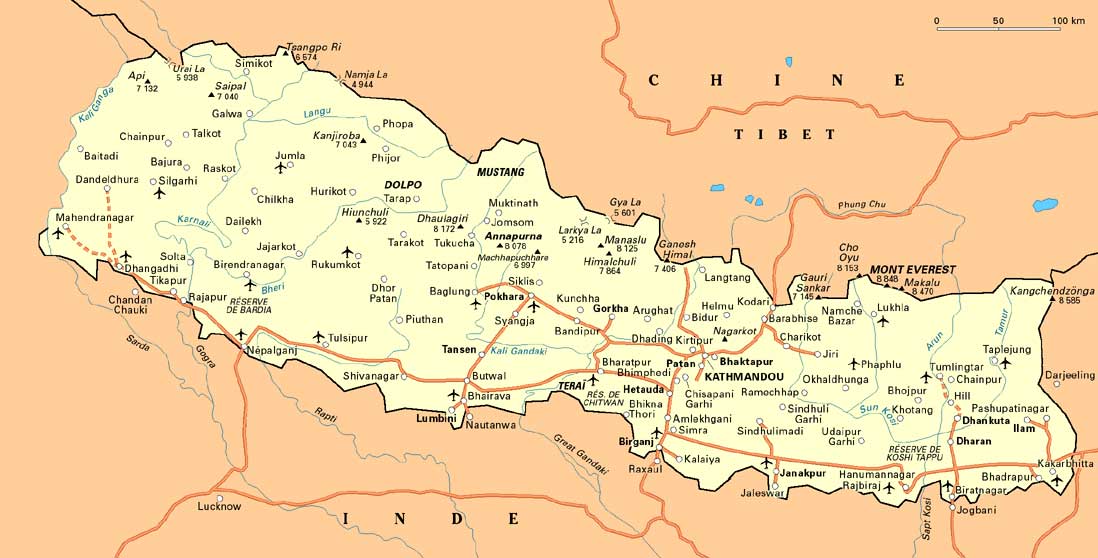
Népal : levée du couvre-feu dans un district du sud

2009-03-07
KATMANDOU, 7 mars (Xinhua) — L’Administration du district de Chitwan (DAO) a levé le couvre-feu imposé pour une période indéterminée dans certaines parties du district depuis vendredi matin.
La DAO a levé le couvre-feu dans les municipalités de Ratnagar et de Bhandara du district, à quelque 85 km au sud de Katmandou depuis vendredi minuit, après que les fonctionnaires de la communauté tharue se sont mis d’accord de manifester pacifiquement, a rapporté samedi Nepalnews sur Internet.
Les manifestants ont consenti d’éviter la violence après que l’administration locale s’est engagée de recommender au gouvernement central d’accorder des compensations aux familles des décédés, de les déclarer martyrs et de se charger des frais pour les soins des blessés.
Cependant, la grève appelée par la communauté tharue dans le district Terai a continué pour la sixième journée.
Le gouvernement a officiellement demandé à la communauté tharue de venir s’asseoir pour un dialogue en envoyant vendredi une lettre. Le ministre de la Paix et de la Réhabilitation, Janardan Sharma Prabhakar, a laissé entendre un éventuel dialogue samedi.
Les chefs de la communauté tharue ont indiqué qu’ils négocieraient seulement avec le Premier ministre, Prachanda, et qu’ils ne cesseraient pas la grève même si les négociations se déroulent.
Trois personnes, dont un policier, ont été tuées au cours des affrontements entre la police et les protestataires tharus à Chitwan depuis jeudi soir. Environ 40 manifestants et policiers ont été blessés au cours du conflit.
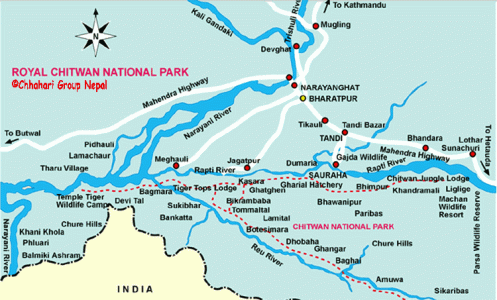
District de Chitwan
चितवन जिल्ला
Le district de Chitwan est l’un des 75 districts du Népal. Il est rattaché à la zone de Narayani et à la région de développement Centre. Le chef lieu est Bharatpur ***Cop slain, two killed : Riots rule, curfew on in Chitwan

DIPENDRA BADUWAL
RATNAGAR (CHITWAN), March 7 – Tension escalated in Ratnanagar Municipality of Chitwan district on Friday after Kamal Chaudhary and Bipin Chhetri, who had sustained gunshot wounds in police firing, died in course of treatment on Thursday night and Friday.
Chaudhary was shot while he was participating in a demonstration of the Tharu community, while Chhetri was shot while he was watching the demonstration from his house.
Defying the curfew order of the district administration, enraged protesters descended on the streets and clashed with security personnel. The curfew is in force indefinitely.
The mob hacked Armed Police Force (APF) constable Kumar Budathoki to death. At least 20 people, including police personnel, were injured in the ensuing clash. Around 40 demonstrators were detained.
Police constable Prakash KC, who was critically injured, has been airlifted to the capital for treatment. Local people have accused the security personnel of barging into houses and attacking innocent people after Budathoki was killed.
Meanwhile, demonstrators agreed to continue with their stir in a peaceful manner after an agreement at the District Administration Office (DAO).
Chief District Officer Ratnaraj Pandey said the agitators had agreed to go for peaceful protests after the administration pledged to compensate the families of those killed in the Chitwan clash and bear medical expenses of the injured.
The Tharu community continued with its protests in various Tarai districts against the recently-issued ordinance that has enlisted the group under the Madheshi category.
In Siraha district, agitators continued to stage rallies and demonstrations in various areas.
Ten people were injured when demonstrators clashed with police at Bardaghat in Nawalparasi district. The protesters also vandalised four vehicles at Tulsinagar in the district.
Minister for Peace and Reconstruction Janardan Sharma said in Kathmandu that he had sent formal letters to the Tharu Welfare Council and Tharu Liberation Front inviting them for talks. He informed that the dialogue could « possibly » be held on Saturday. The agitating groups acknowledged receiving the government invitation for talks, but said they would sit for parleys only after the cabinet corrected its decision on categorisation of the Tharus as Madhesis and the Prime Minister addressed them directly.
OHCHR calls for restraint
KATHMANDU: The UN Office of the High Commissioner for Human Rights in Nepal (OHCHR-Nepal) has urged all sides to exercise restraint during protests and resolve differences through talks. “Protesting groups should use peaceful means only, while the Nepal Police and APF should use minimum force, and if force is necessary, ensure that it is proportional to the threat posed,” OHCHR-Nepal said in a statement. The UN body also expressed concern about the “use of live ammunition by police”.
Three killed as ethnic protest turns deadly in southern Nepal

6 mars 2009
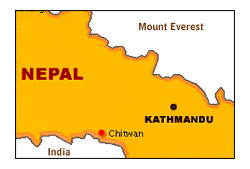
Kathmandu – At least three people, including a police officer, were killed as violence erupted in southern Nepal during a general strike by an ethnic group, official said Friday. Local administration in Chitwan district, about 120 kilometres south of Kathmandu, said it had imposed a curfew to contain spiralling violence in several parts of the district.
The violence came on the fifth day of a general strike by the Tharu community across the southern Nepalese plains, known as the Terai.
« Protestors attacked a police patrol during curfew on Friday with knives and machetes and sticks, killing one and injuring one more officer, » said Lok Bahadur Chettri, the chief government administrator of Chitwan district.
« Police had to fire in self-defence in several areas, and at least two protestors were killed in the police action, » Chettri said. « The administration has clamped down an indefinite curfew to try to contain the situation. »
At least 20 people were reported injured during clashes across the district.
The Tharu community has been protesting the government’s decision to classify them with the Madhesi ethnic group, a dominant group in southern Nepal. The move deprived the Tharu of greater quotas in government jobs.
They have also accused the Maoist-led government of trying to destroy their identity despite using the Tharu to come to power by promising them greater autonomy.
Protestors have blocked traffic and imposed shutdowns in more than a dozen districts in southern Nepal.
Thousands of people travelling along a major highway have been stranded by the strike.
Nepal‘s Maoists, who came to power after winning elections in April, have been struggling to end ethnic tensions in southern and eastern Nepal.
More than 250 people have been killed in continuing violence in the Terai in the past two years.
During their decadelong insurgency, the Maoists enlisted the support of ethnic groups across the country, promising them their own autonomous states and a greater say in the country’s politics when the Maoists took power.
Tharus Protest Against Madhesi Identity

Cop among 3 dead, 36 injured in Chitwan; curfew imposed
CHANDNI HAMAL
CHITWAN, March 6: Protestors in Chitwan district killed a policeman by attacking him with a khukuri (machete), Friday afternoon, according to Chief District Officer Ratna Raj Pandey. The dead cop has been identified as Kumar Budhathoki, an Armed Police Force member of Gadhimai Gadh Bhandara. The protests in Chitwan by Tharus — who are objecting to being bracketed as Madhesis — are going on despite curfew orders.
This brings the number of dead in the protests that began three days ago to three. About 40 people — half of them policemen — have been injured.
The protestors snatched the helmet of a few policemen and hacked one of them to death, while leaving another cop seriously injured, said CDO Pandey.
Earlier, two people were killed and at least 36 injured in clashes between police and Tharau protesters in Chitwan Thursday night when police opened fire to disperse the protestors who had blocked the East-West Highway.
Kamal Chaudhari, 19, of Bachhyauli village in east Chitwan succumbed to his bullet wound in a hospital in the district at 3 a.m. Friday. He was hit with a bullet when the police fired bullets to disperse the protestors who had seized the East-West Highway on Thursday night.
Another protestor, Bipin Khadka of Shaktikhor-5, died on Friday while being taken to the capital for treatment.
Concluding that the situation was getting out of control, the district administration clamped a curfew in Ratnanagar Municipality in east Chitwan since 10 a.m. Friday.
Although the police managed to free up the highway at 10 p.m. Thursday, the protestors have seized the highway at Tandi, Sauraha Chowk and Bakulahar in east Chitwan since early Friday morning. Market and schools have remained shut due to the protest. No vehicles are plying in these areas.
Demonstrators are staging protests in eastern Chitwan, despite curfew, by burning tires. They intensified the protest after reports of deaths.
The Tharu community in Tadi in Chitwan had called banda (general shutdown) for the last three days and had blocked the highway against a cabinet decision of identifying them as one of the Madhesi groups.
Police said they fired tear gas shells and resorted to firing to remove the protestors who had blocked the highway forcing hundreds of passengers to remain stranded.
According to Kari Mahato, president of Tharu Students´ Society, Chitwan branch, the Tharu demonstrators were injured in Tandi, Sauraha Chowk and Bakulahar in the police firing. Most of the injured have been hit on their head or chest. He said the police have arrested dozens of protestors.
Three of injured are being treated in Bharatpur Medical College and the rest in Bharatpur Hospital. Police claimed that some of the protestors who clashed with them had brought weapons.
“Protesting groups should use peaceful means only, while the Nepal Police and Armed Police Force (APF) should use minimum force,” the office of the UN High Commissioner for Human Rights in Nepal said after clashes between protesters and security forces Thursday night led to the death of two protesters.
Kamal Chaudhary, a 19-year-old high school student, was killed outright in police firing in Chitwan district Thursday night while an injured protester, Bipin Chhetri, died while being rushed for medical treatment. Though the authorities enforced indefinite curfew in the two tense areas in the district, famed as a tourist destination, a mob armed with khukuris Friday attacked an APF constable on duty, slashing him to death.
While police claimed they fired in self-defence after protests turned violent, the UN agency is stressing that firearms must not be used in policing demonstrations till all other methods have been exhausted.
UN alarmed as Nepal quota violence kills 3
6 Mar 2009,
KATHMANDU: The UN’s rights agency in Kathmandu Friday appealed for restraint and dialogue after a simmering ethnic protest in the Terai plains flared into violence, killing three, including a policeman.
The protests, that have paralysed the Terai since Monday, have been called by the Tharu community, the descendants of the royal clan to which the Buddha belonged. However, with the passage of times, the once rich and powerful community has been reduced to bonded slaves who are at the bottom of the social hierarchy and regarded as untouchables.
The Tharus have been enraged by the Maoist government’s recently announced reservation policy that has pledged 45 percent reservation in all state organs for backward communities. They fear that they have been clubbed with the other leading group in the Terai plains, the Madhesis of Indian origin, and will lose their seats to the latter.
Though the government said it will not treat the Tharus as Madhesis and urged the protesters to sit for dialogues, they have rejected the olive branch. The Tharu Kalyankarini Sabha and Tharu Samyukta Sangharsh Samiti, that have been spearheading the strike in the Terai, say they will keep up the stir till the Maoist government withdraws the reservation ordinance.
|
|
|
|
|
|
|
|
Three dead in Nepal ethnic protest: official

KATHMANDU (AFP) — At least two protesters and one policeman died as ethnic violence flared anew in Nepal, with protesters calling for greater autonomy, officials said Friday.
Nepal‘s Maoists, who came to power after winning elections last April, have been struggling to end ethnic tensions in the south, where more than 200 people have been killed in the past two years.
« One protester was shot dead Thursday and another died Friday from bullet wounds while receiving hospital treatment, » chief district officer Ratnaraj Pandey told AFP from Chitwan town, south of the capital Kathmandu.
A policeman was also killed and another suffered serious injuries after scores of protesters attacked police with knives, said the official.
« The protest turned violent and policemen were trying to disperse the crowd from the highway, » said Pandey.
« The police first tear-gassed protesters and resorted to firing to open a blocked highway which had stranded hundreds of vehicle passengers, » Lok Bahadur Chettri, a local administrator, told AFP by telephone, earlier in the day.
Large numbers of police have been deployed in a bid to avert further violence, he said.
The deaths were the first since the latest protests by the Tharu community began Monday in Chitwan and spread to several areas on the southern plains known as the Terai, where they have crippled daily life.
Tharu protesters have been burning tyres and throwing tree trunks across streets to block cars and trucks while shops, schools and industries have closed.
The Tharus are grouped with other ethnic communities in the Terai, a fertile plain bordering India, and want recognition as a separate ethnic group with greater self-government.
Of Nepal‘s population of 27 million, the Tharus make up around two million and are scattered around the southern plains bordering India.
Clashes with police keep erupting despite a curfew, Chettri said. « The situation is still tense as protesters are defying curfew orders. »
The ethnic unrest erupted after a 2006 peace deal between Maoist and mainstream parties ended a decade-long civil war. Up to 20 major ethnic groups are demanding greater autonomy for themselves.
The impoverished Himalayan nation is in the process of drafting a new constitution that is intended to address some of the demands by ethnic groups in the Terai.
Népal: le Haut Commissariat des droits de l’homme réclame la fin des violences à Chitwan

6 mars 2009 – Le bureau du Haut Commissariat des droits de l’homme (HCDH) du Népal à demandé que les manifestations à Chitwan cessent et se résolvent par le dialogue, à la suite du décès de deux manifestants et de la mort d’un membre de la force de police armée (APF).
Les groupes de manifestants ne devraient utiliser que des moyens de protestation pacifiques, tandis que la police Népalaise et l’APF ne devraient utiliser qu’un minimum de force, et si cette force est nécessaire, s’assurer qu’elle est proportionnelle à la menace posée, indique un communiqué.
Le Haut Commissariat des Nations Unies aux droits de l’homme (HCDH) du Népal est particulièrement inquiet de l’utilisation d’armes à feu par la police. Une personne a été tuée et plusieurs blessées, dont trois gravement, après que la police a tiré à Tandi VDC, au Chitwan, la nuit du 5 mars. Un couvre-feu a depuis été déclaré dans la municipalité de Ratnanagar.
Alors que la police affirme que les coups de feu ont été tirés en légitime défense contre une manifestation violente, le HCDH du Népal souligne que les armes à feu ne devraient pas être utilisées dans les manifestations sauf en cas de sérieux danger de mort et seulement une fois que toutes les autres alternatives aient été considéré.
Le Bureau est également inquiet des informations montrant que deux membres de l’AFP ont été attaqués par des manifestants avec des khukuris (de grands couteaux) pendant la manifestation du 6 mars. Une des victimes est morte par la suite de ses blessures et la deuxième est gravement blessée.
Le HCDH à renouvelé sa demande d’investigations approfondies et indépendantes de ces meurtres.
Le représentant du HCDH au Népal, Richard Bennett, a dit avoir discuté avec le gouvernement, la police et les représentants de quelques groupes manifestants.
« J’ai exprimé mes inquiétudes sur les violences dans les manifestations et l’utilisation d’armes. Le gouvernement m’a également informé qu’il avait changé sa décision de catégoriser plusieurs groupes Terai comme Madheshis. Finalement, je note que l’imposition d’un couvre-feu ne justifie pas l’utilisation d’armes à feu dans des situations qui ne posent pas de danger de mort » a-t-il fait remarquer.
Violence erupts during protests in Nepal

March 06, 2009
KATHMANDU, Nepal, March 6 (UPI) — The United Nations on Friday called on police and civilians in Nepal to avoid hostilities after protests became violent and three people were killed.
Richard Bennett, representative of the U.N. Office of the High Commissioner for Human Rights in Nepal, said Friday that police in Nepal‘s south-central Chitwan district were using live ammunition in response to protesters. Officials estimate two demonstrators and a police officer were killed in the violence, the United Nations reported.
« I have spoken with the government, the police and representatives of some protesting groups and voiced my concerns about violent protests and the use of lethal force, » Bennett said in a statement.
« OHCHR-Nepal is extremely concerned about the use of live ammunition by police. »
The U.N. office is calling on all sides to open a dialogue and prevent a further escalation of violence.
Protesters vandalize over 25 vehicles in Chitwan
CHADANI HAMAL
CHITWAN, March 5: Situation in Chitwan has turned tense in the course of the banda (general strike) called by Tharu Kalyankarini Sabha, an organization of Tharu indigenous community in the Tarai.
The organization has continued protests in Tarai districts challenging the the government-introduced an ordinance that has listed Tharu, dalit and other indigenous communities as Madhesi groups.
Hundreds of vehicles and their passengers have been stranded here in the district after the protesters blocked the East-West Highway at Gondrang in Bharatpur, Chitwan.
Police attempts to restart vehicular movement has failed and a queue of vehicles could be seen stretching about 15 kilometers along the road.
The situation turned tense after youths from Tharu community vandalized over two dozen vehicles that allegedly defied the banda.
The clashes between police and protesting youths are continuing in the areas. Tharu youths holding poles and batons have blocked the road saying that they would not withdraw the protests until the government fulfills their demands.
The situation had taken a nasty turn following clashes among the police, protesters and passengers that took place Wednesday night after police tried to restart vehicular movement.
NHRC suggests govt talk to agitating groups
REPUBLICA KATHMANDU, March 4: The National Human Rights Commission (NHRC) has urged the government, the political parties and agitating groups to resolve the issue of identity, among other agenda items, through dialogue.
Issuing a statement Thursday, NHRC suggested the government agencies not use excessive force against peaceful demonstrators. The rights body also urged the agitating groups to carry out their demonstrations in a peaceful manner.
NHRC issued the statement with reference to the ongoing protests called by the Tharu Kalyankarini Sabha, an organization of the indigenous Tharu community in the Tarai. The organization has challenged the government´s ordinance listing the Tharu, dalit and other indigenous communities as Madhesi groups
***
Les Tharus
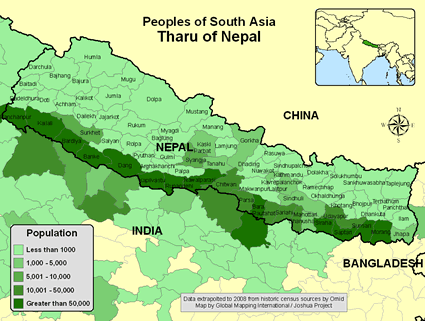
Arjun Guneratne, Many Tongues, One People. The Making of Tharu Identity in Nepal. Ithaca-London, Cornell University Press, 2002, xvii + 236 p., bibl., ill., index. (Compte rendu dans l’Homme, avril 2003)




 anthropologie du présent